




Network and connectivity security spans the technologies and practices that protect networks, devices, and data from a growing range of threats — from supply-chain and signaling attacks to threats against private networks, IoT, and critical infrastructure. As networks become more software-defined, distributed, and open, the attack surface expands, and security shifts from a perimeter model toward zero-trust, identity-based, and AI-assisted defense. For operators and enterprises, security is now central to private networks, 5G standalone, edge, and IoT decisions rather than an afterthought. Regulation and nation-state activity have raised the stakes further. This channel covers security across telecom and enterprise connectivity — private and public network security, zero trust, IoT and OT, and the threats shaping the landscape — with analysis aimed at teams securing modern, distributed networks against evolving risk.





As enterprises move deeper into digital transformation, private 5G has emerged as a pragmatic answer to a specific problem: how to deliver controlled, reliable, and secure wireless connectivity where public networks fall short. Unlike public 5G, a private network is built around the needs of a single organization, offering tailored capacity, customization, and coverage in environments that defeat conventional wireless.
That value is clearest in demanding settings. Industrial operations that depend on low-latency machine-to-machine communication, and businesses spread across large campuses, both gain from a network they own and control.
But control cuts both ways. The same architecture that makes private 5G powerful also makes security a first-order design question rather than an afterthought. In a threat landscape that grows more sophisticated each year, securing a private 5G deployment is not a feature to bolt on later. It is part of the build.
The right approach is grounded and comprehensive. It accounts for the current threat environment, the vulnerabilities inherent to the technology, and the critical business functions the network supports. For most enterprises, the real question is not whether to adopt private 5G, but how to stand up a security posture that is resilient, adaptable, and matched to the risks this technology introduces.
Security is the headline advantage cited for private 5G, but the honest answer is more nuanced than "yes." Private 5G is not automatically the most secure connectivity option in every dimension. What it offers is the strongest balance of security, flexibility, and scale, which is why it fits enterprises that need both protection and reach.
The security of private 5G starts with its architecture. In its most secure form, the network is fully isolated from the public network, hosted and managed on-site, and operated entirely by the enterprise. That isolation removes the network from the open internet and the vulnerabilities that come with it. On top of it, private 5G layers advanced encryption, strict access controls, and close monitoring of network traffic. Together these create a framework that is far less exposed to unauthorized access and external threats. Network slicing adds another dimension. By carving the network into separate virtual segments, each with its own security policy, an enterprise can match controls to the sensitivity of the data flowing through each slice.
A fair comparison puts private 5G alongside private LTE, Ethernet, and WiFi rather than against public 5G alone:
| Feature | Private 5G | Private LTE | Ethernet (Wired) | WiFi |
|---|---|---|---|---|
| Isolation | Full isolation possible | Full isolation possible | Inherently isolated | Shared medium, less isolated |
| Encryption | Advanced encryption | Less advanced than 5G | Depends on protocol | Less robust |
| Access control | SIM-based authentication | SIM-based authentication | Physical and protocol-based | SSID and password |
| Network control | Full on-site control | Full on-site control | Full control, limited flexibility | Less control, more exposure |
| Network slicing | Supported | Not supported | Not applicable | Not supported |
| Edge computing integration | Seamless, enhances security | Possible, less integrated | Possible, can be very secure | Less integrated |
| Traffic monitoring | Easier, software-defined | Harder than 5G | Easier, fixed pathways | Harder |
| Attack surface | Reduced by isolation | Reduced by isolation | Minimal, no wireless access | Larger, wireless access |
| Physical security | High, controlled environment | High, controlled environment | Very high, hard to tap | Lower, easier to intercept |
| Scalability | High, with slicing | Scalable, no slicing | Limited | Scalable but less secure |
The table makes the trade-off clear. Ethernet is exceptional on physical security and isolation, but it cannot match private 5G for flexibility, mobility, or scale, particularly when supporting large fleets of IoT devices and mobile users. Private LTE is secure but lacks 5G capabilities like network slicing. WiFi is convenient and widely deployed, but its shared medium leaves it more exposed to interference and eavesdropping.
No single option wins on every axis. The right choice depends on what the enterprise needs to protect and how dynamic its environment is. For organizations that need strong security without sacrificing scale and mobility, private 5G is usually the best fit.

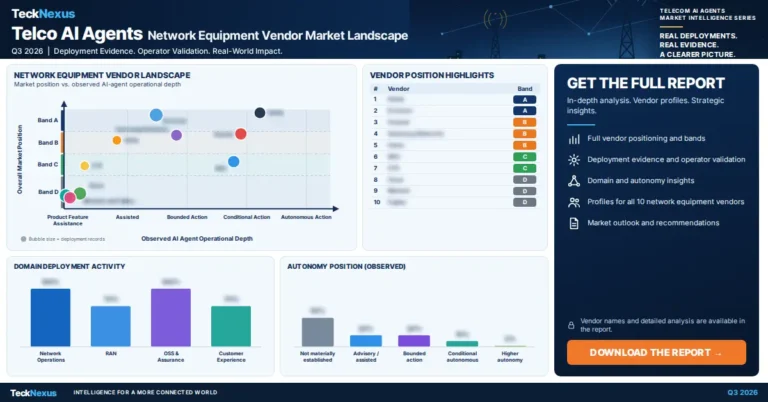
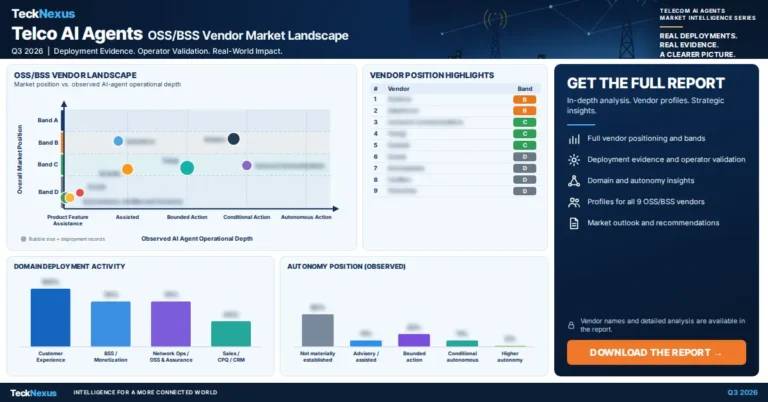
Benchmark your Telecom AI Agent position against relevant competitors using verified deployments, operator references, market evidence and domain traction.




