Private Network
Intelligence
Intelligence Journeys
Utilities Private Broadband Planning
AI Use Case Planning for Utilities

Network Infrastructure

Network infrastructure encompasses the physical and logical foundation of connectivity — radio sites, fiber, transport, data centers, and the equipment that ties them together. Modern infrastructure is increasingly software-defined, virtualized, and cloud-native, blurring the line between hardware and the software that runs on it. Decisions about infrastructure shape capacity, coverage, cost, and the ability to support new services like slicing, private networks, and edge computing. For operators and enterprises, infrastructure strategy balances capital cost, vendor choice, and the shift toward open, disaggregated, and cloud-based architectures. This channel covers network infrastructure across radio, transport, and core — including the move to virtualized and cloud-native systems, open architectures, and the vendors building them — with analysis of how operators are modernizing the foundations their services depend on, and what it costs.

The telecommunications industry is undergoing a transformative shift driven by the synergy of fiber optic cables and Generative Artificial Intelligence (GenAI). This powerful combination enhances network operations, providing high-speed, low-latency data transmission essential for AI models. As telcos like SK Telecom and TELUS integrate AI into their services, strategic investments in fiber infrastructure and AI expertise are crucial. Discover how this convergence is enabling network management, boosting efficiency, and setting the stage for future advancements in the telecom sector.
The telecom industry is undergoing a transformative shift with the integration of Generative AI technologies. Generative AI, with its advanced algorithms and data-driven capabilities, is revolutionizing various aspects of telecom operations, from network management and security to customer service and marketing. This article delves into the diverse use cases of Generative AI within the telecom sector, highlighting how these technologies enhance operational efficiency, optimize network performance, and improve customer experiences.
As part of its partnership with FNT Software, Blackfoot Communications will utilize the FNT Command Platform and FNT GeoMaps application to document and manage its extensive communications network. As a centralized, integrated system for the management of all network and service resources, FNT Command provides all the information and functionality needed for planning, engineering, service fulfillment, and service assurance processes.
For years, telcos have been talking about the disruption and opportunity that a new breed of cloud-native 5G services will bring. It takes one lightbulb moment to shift industry perspectives into a different gear. In 2023, that moment came with the news that Amazon is offering mobile connectivity. Discover how retailers are prioritizing customer experience with cloud-based infrastructure with analytics and machine learning, powering GenAI to deliver personalized packages and rapid time-to-market.
In this 5G Guys podcast episode, we talk with guest Steve Orrin, the Chief Technology Officer and Senior Professional Engineer for Intel Federal. Steve shares insights from his ten-year tenure at Intel, focusing on helping the government adopt advanced technologies. The conversation covers a wide range of topics, including the impact of AI, cybersecurity, pervasive connectivity, and the role of data in driving technological innovations. Steve provides examples of AI applications in government sectors, such as using drones for forest health monitoring and the benefits of pervasive connectivity in crisis situations. He also touches upon the cybersecurity challenges new technologies present and the importance of Zero Trust Architecture in managing these issues. Additionally, Orrin discusses regulatory policies and the future of technology adoption at the federal level, with implications for consumer technology. The episode offers a comprehensive look at the intersection of government, technology, and security, highlighting the ongoing innovations and challenges in the field.
WideOpenWest (WOW!), a prominent broadband provider, has demonstrated a marked improvement in stemming broadband subscriber losses in Q1 2024. The company reported a reduction in subscriber loss to just 400 for the quarter, significantly lower than previous figures, which included a loss of approximately 2,900 subscribers in the same quarter of the previous year, and 13,300 in the quarter before that. This positive shift is attributed to various strategic initiatives, including enhanced service offerings and network expansions.
German mobile operators, including O2 Telefonica, Vodafone Germany, and Deutsche Telekom, have collaborated to roll out a comprehensive 4G/LTE network across Berlin's subway routes, aiming to enhance connectivity for passengers and prepare for future 5G capabilities.
Explore the world of telecom leadership with Carrie Charles on the latest episode of 5G Talent Talk. Joining her is Lynn Whitcher, the President of the Women's Wireless Leadership Forum (WWLF) and General Counsel for MD7. Lynn shares her remarkable journey from litigator to telecom industry leader, offering insights into the evolving landscape of wireless infrastructure and the crucial role of women within it.

In this episode, Lynn emphasizes the significance of networking and relationship-building in the telecom industry, shedding light on WWLF's mission to support and empower women professionals. Discover the wealth of opportunities available through WWLF, a national organization powered by the Wireless Infrastructure Association (WIA), as Lynn and Carrie delve into the organization's impactful programs and networking events, including the WWLF annual event coming up at Connect (X) in Atlanta. Learn how WWLF is driving change by promoting STEM careers and advocating for greater female representation in the wireless industry.

Join the conversation as Lynn and Carrie explore the importance of employer support, the evolution of diversity initiatives, and the power of self-investment in career advancement. Whether you're a seasoned professional or a budding talent, this episode offers actionable insights and inspiration for thriving in the dynamic world of telecom.
The dispute between T-Mobile and Lycamobile deepens as Lycamobile opposes T-Mobile's planned acquisitions, including Mint Mobile, due to concerns over potential anti-competitive practices. Lycamobile claims that T-Mobile has failed to provide essential technological services and that the acquisitions would further disadvantage independent MVNOs. They have called for regulatory intervention to ensure fair competition in the telecom sector. As T-Mobile defends its actions, stating that Lycamobile's claims are untimely, the outcome of this conflict may significantly impact consumer choices and market competition in the telecommunications industry.
Step into the dynamic world of wireless infrastructure with Carrie Charles on 5G Talent Talk as she sits down with Patrick Halley, the President and Chief Executive Officer of the Wireless Infrastructure Association (WIA). Discover Patrick's unexpected journey into telecommunications and his pivotal role in shaping connectivity for all. Patrick shares insights into WIA's mission to advocate for widespread wireless infrastructure deployment, ensuring connectivity everywhere. Get an exclusive sneak peek into the upcoming Connectivity Expo "Connect (X)" in Atlanta, promising unparalleled opportunities for collaboration and knowledge exchange. Explore WIA's groundbreaking workforce development initiatives, including apprenticeship programs and innovative training, addressing the evolving needs of the industry. Gain valuable insights into the challenges and opportunities facing the wireless industry in 2024 and beyond, from the impact of artificial intelligence to the proliferation of private 5G networks. 

Frequently Asked Questions

What’s typically included under ‘network infrastructure’ as a category?
It generally covers the physical and virtual building blocks of a telecom network: cell towers and small cells that handle wireless connections to devices, fiber-optic and microwave transport links that connect those cell sites back to the broader network, data centers running virtualized network functions and core network software, and increasingly, the cloud-based and virtualized systems that have replaced much dedicated, single-purpose hardware. It also encompasses supporting infrastructure like power systems, cooling, and physical site security at network facilities, which become increasingly important as networks add more, smaller, distributed sites to support 5G’s denser coverage requirements.
How has network infrastructure changed with the shift to 5G and cloud-native architectures?
Infrastructure has moved from largely fixed, purpose-built hardware toward software running on standardized servers, a shift broadly described as virtualization or cloud-native architecture. This makes infrastructure considerably more flexible to upgrade, scale, and reconfigure, since adding capacity or introducing a new network function often becomes primarily a software deployment rather than requiring new physical hardware installation at every affected site. However, this flexibility comes with added complexity: virtualized infrastructure running across cloud platforms, often from multiple different vendors, requires more sophisticated orchestration, security, and assurance tools than the comparatively simpler task of managing a fixed set of dedicated hardware boxes.
What’s driving continued infrastructure investment even after 5G is widely deployed?
Ongoing demand growth from video streaming, IoT device proliferation, AI workloads, and enterprise applications keeps pushing operators to add network capacity even after initial 5G coverage milestones are achieved. Densifying coverage with additional small cells remains necessary to deliver 5G’s fastest speeds consistently in crowded urban areas, since high-band 5G’s short range requires considerably denser site coverage than earlier, longer-range network technologies needed. Infrastructure also needs ongoing investment to prepare for 5G-Advanced features and eventual 6G requirements, meaning operators are frequently investing in upgrades simultaneously with, rather than strictly after, completing earlier-generation rollout milestones.
Why do ‘brownfield’ and ‘greenfield’ come up so often in infrastructure discussions?
Greenfield refers to building a new network from scratch with the latest available technology, which is generally easier to design optimally since there’s no legacy equipment to work around, but requires substantial upfront capital, making it more common for new market entrants or operators in regions without significant existing infrastructure. Brownfield refers to upgrading existing infrastructure, which is typically cheaper and faster than building entirely new infrastructure, but is constrained by legacy equipment, existing site locations, and earlier design choices. Most established carriers in mature markets operate primarily brownfield networks, continuously upgrading existing infrastructure incrementally rather than rebuilding it from the ground up.
How do operators decide where to invest limited infrastructure budget first?
Operators generally prioritize infrastructure investment based on a combination of factors: where existing network congestion is most acutely affecting customer experience, where competitive pressure from rival carriers makes infrastructure quality a more pressing business concern, where regulatory requirements or government incentives, like rural coverage mandates, create specific obligations, and where enterprise customer opportunities, like a major private 5G network deal, justify targeted investment. Dense, high-revenue urban and suburban areas typically receive investment priority since they generate the most subscriber revenue relative to infrastructure cost, while rural and remote area investment is often driven more by regulatory requirements or subsidy programs than purely commercial return calculations.
What’s the difference between core network infrastructure and access network infrastructure?
The core network refers to the central infrastructure that handles functions like routing calls and data, managing subscriber identity and billing, and connecting a carrier’s network to other networks and the broader internet, typically concentrated in a smaller number of data centers. The access network, sometimes called the radio access network or RAN, refers to the infrastructure that actually connects end-user devices to the network, including cell towers, antennas, and radio equipment distributed across thousands of physical locations to provide coverage. These two layers require different kinds of infrastructure investment: the core involves fewer, larger, centralized facilities, while the access network involves managing many smaller, distributed sites.
How does network sharing between competing carriers actually work?
Network sharing arrangements let two or more competing carriers jointly build, own, or use certain pieces of infrastructure, most commonly cell towers and sometimes radio access network equipment, rather than each carrier independently building entirely separate, duplicate infrastructure covering the same geographic area. This is particularly common for tower infrastructure, where independent tower companies often own physical structures and lease space on the same tower to multiple competing carriers’ equipment, reducing the capital cost and environmental footprint of network buildout. More extensive forms of sharing, extending to radio equipment itself, are more common in certain markets and regulatory environments than others, since regulators need to ensure shared arrangements don’t undermine meaningful competition.
What role does fiber play in supporting wireless network infrastructure?
Fiber plays a foundational role in supporting wireless network infrastructure, even though it’s not the wireless connection end users directly experience on their phones. Cell towers and small cells need to connect back to the broader network core, a connection known as backhaul, and fiber-optic cabling generally provides the most reliable, highest-capacity backhaul option compared to alternatives like microwave wireless links. As 5G networks add more, denser small cell sites to support high-band coverage in urban areas, the need for fiber backhaul connecting each additional site grows correspondingly, making fiber deployment an essential, if less visible, companion investment. In some cases, a lack of available fiber in a specific area becomes the actual limiting factor on how quickly 5G capacity can be added there.


Partner Hubs

Telco AI Agent Leadership

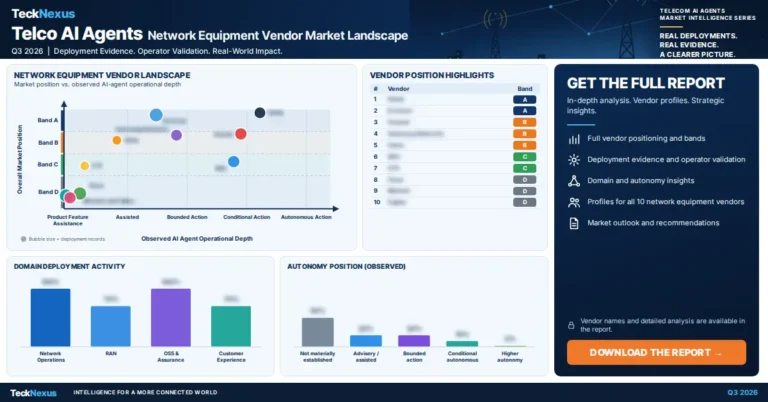
Telco AI Agent Leadership Landscape - Network Equipment Vendors
Network Equipment Vendor Report
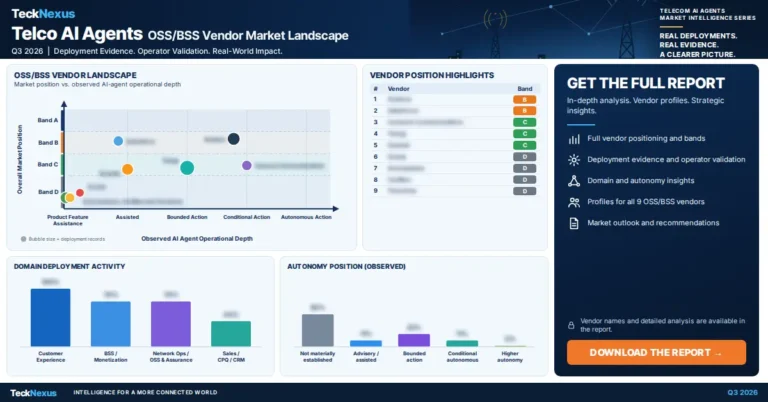
How are Amdocs, Salesforce, Comarch, Totogi, Qvantel, Oracle and other OSS/BSS vendors deploying telecom AI agents?
OSS/BSS Vendor Report
How are Amdocs, Salesforce, Comarch, Totogi, Qvantel, Oracle and other OSS/BSS vendors deploying telecom AI agents?
System Integrator Report
Scroll to Top