OpenAI

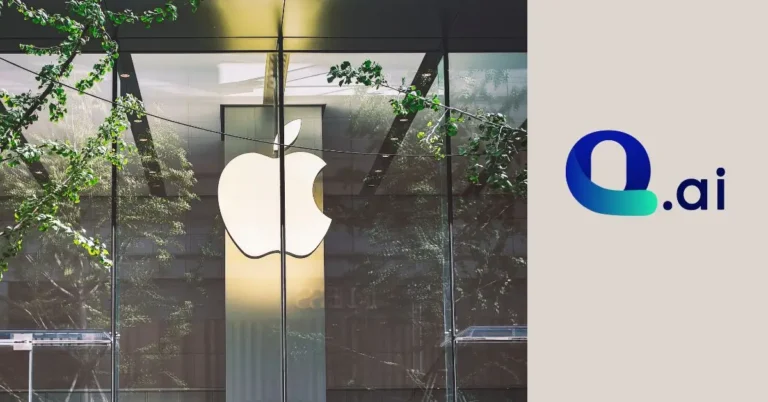
Apple’s purchase of Israeli start-up Q.ai accelerates its shift toward multimodal, audio-first wearables and tighter on-device AI. Apple acquired Q.ai, a Tel Aviv-based AI company operating in stealth since 2022, in a transaction reported around $2 billion, making it Apple’s second-largest acquisition after Beats. The move lands as Apple pushes a broader AI refresh across devices and services, including a reworked Siri due next month and a reported integration of Google’s Gemini into Apple Foundation Models. The core value is a human-computer interface designed to reduce friction between intent and AI execution. This enables “silent speech” and context awareness without overt voice commands or touch.
Google has introduced a sharply priced AI Plus subscription in India to push generative AI into the mass market and counter OpenAI’s ChatGPT Go. The AI Plus plan launches at ₹199 per month for new users for six months, then moves to ₹399 per month. The bundle raises usage limits for Gemini 3 Pro, unlocks video generation within Google’s apps, expands NotebookLM’s “deep research” capabilities, and adds 200GB of storage across Google Photos, Drive, and Gmail. Family sharing is included, signaling a household-centric growth strategy.
Disney will invest $1 billion in OpenAI and become Sora’s first major content licensing partner, enabling fans to generate and share short videos that feature more than 200 characters and environments from Disney, Pixar, Marvel, and Star Wars. The agreement spans three years, excludes actor likenesses and voices, and extends to ChatGPT Images for IP‑compliant image generation. Disney will adopt OpenAI APIs across products and operations, including features for Disney+ and employee productivity, and may showcase select user creations on its streaming service. This agreement formalizes licensed synthetic media at scale and accelerates the convergence of UGC, premium IP, and AI tooling.
A potential take‑private of DigitalBridge by SoftBank would concentrate capital, power, and build capability at the precise chokepoints of the AI and telecom stack. The center of gravity in AI infrastructure has moved from buildings and GPUs to grid access, entitlements, and construction lead time. DigitalBridge controls rights to roughly 21 GW of power across its global portfolio—effectively a banked inventory of megawatts that can be turned into contracted capacity faster than new entrants can clear interconnection queues or procure transformers. This transaction is fundamentally about compressing multi‑year build timelines for AI factories into quarters.
The administration plans an executive order to set a single national AI rulebook and override state-level frameworks, a move with immediate implications for telecom, cloud, and enterprise AI strategies. President Trump signaled he will sign an executive order establishing a uniform federal approach to AI governance that preempts state regulations. Reports indicate the order aims to reduce compliance friction by replacing diverse state rules with a lighter-touch national framework focused on competitiveness. State officials from both parties, safety advocates, and labor groups are preparing to fight the order, citing risks related to consumer harm, deepfakes, hiring bias, and child safety. On the other side, Silicon Valley leaders warn that 50-state compliance regimes could deter innovation and blunt national competitiveness.
Nvidia’s latest quarter signals that AI infrastructure spending is not cooling and is, in fact, broadening across clouds, sovereigns, and enterprises. Nvidia delivered $57 billion in revenue for the quarter, up more than 60% year over year, with GAAP net income reaching $32 billion; the data center segment accounted for roughly $51.2 billion, dwarfing gaming, pro visualization, and automotive combined. Management guided next-quarter sales to about $65 billion, exceeding consensus by several billion and underscoring that supply remains tight for cloud GPUs even as deployments ramp across hyperscalers, GPU clouds, national AI initiatives, and large enterprises.
Alphabet’s Google will spend $40 billion to build three AI-focused data centers in Texas, signaling that power access and grid proximity now define hyperscale strategy more than any single technology feature. The build spans one campus in Armstrong County in the Texas Panhandle and two in Haskell County near Abilene, with investments running through 2027. Google expects the program to create thousands of construction and supplier jobs and hundreds of long-term operations roles, consistent with typical hyperscale staffing patterns. Texas offers relatively low-cost power, faster interconnection timelines, abundant land, and pro-investment policies, making it second only to Virginia in U.S. data center count.
Jeff Bezos is stepping back into day-to-day operations as co-CEO of Project Prometheus, a new AI company reportedly funded with $6.2 billion to build “AI for the physical economy.” Project Prometheus will be co-led by Bezos and Vik Bajaj, an operator-scientist with leadership experience at Google X, Verily, and Foresite Labs. Early reports indicate the company is targeting engineering and manufacturing tasks across sectors such as aerospace, automotive, and computing hardware. Headcount is already near 100, drawing researchers from OpenAI, Google DeepMind, and Meta, signaling an aggressive push for top-tier AI talent.
Renewables are emerging as the default option for new AI campuses, but the share that is truly carbon-free around the clock will hinge on siting, storage, and market design. Annual REC matching is no longer sufficient for leading buyers; the bar is shifting toward hourly, 24/7 carbon-free energy matching initiatives. Yet diurnal and seasonal variability limits how much of a site’s load can be met by solar and batteries alone, especially in non-sunny regions or during prolonged weather events. Expect mixed portfolios: on-site renewables and batteries, off-site PPAs (solar and wind), emerging long-duration storage, and grid purchases backed by hourly certificates where available.
SoftBank has exited Nvidia and is redirecting billions into AI platforms and infrastructure, signaling where it believes the next phase of value will concentrate. SoftBank sold its remaining 32.1 million Nvidia shares in October for approximately $5.83 billion, and also disclosed a separate $9.17 billion sale of T-Mobile US shares as part of a broader reallocation into artificial intelligence. The proceeds are earmarked for a significant expansion of SoftBank’s AI portfolio, including a major investment in OpenAI and potential participation in “Stargate,” a next-generation AI data center initiative co-developed by OpenAI and Oracle. Despite exiting Nvidia’s equity, SoftBank retains about 90% ownership of Arm.
A cascade of offers from OpenAI, Google, and Perplexity—amplified by Airtel and Reliance Jio—signals a deliberate push to convert India’s scale into durable AI usage, data, and future revenue. With more than 900 million internet users, rock-bottom mobile data prices, and a young, mobile-first population, India offers the world’s deepest top-of-funnel for AI adoption. Giving away premium access—such as a year of ChatGPT’s low-cost “Go” tier, Jio’s bundling of Gemini, or Airtel’s tie-up with Perplexity Pro—maximizes trial, habituation, and data collection across diverse languages and contexts. Even a low single-digit conversion rate translates into millions of subscribers, while non-converters still contribute valuable signals that improve models.
Google has unveiled next‑generation TPU accelerators with up to a 4x performance boost and secured a multiyear Anthropic commitment reportedly worth billions, signaling a new phase in AI infrastructure competition. Google introduced new Tensor Processing Units that deliver roughly four times the performance of prior generations for training and inference of large models. Beyond speed, the design targets better performance-per-watt, a critical lever as AI energy costs surge. Anthropic has secured access to Google Cloud TPU capacity at massive scale, with reports citing availability up to one million TPU chips over the term of the agreement.

Your Brand. Our Intelligence Tools.

Capture leads at the point of evaluation. Talk to Us →

Sponsored by Palo Alto Networks
⚡ Utilities ⏱ 8 min ✓ Free
This tool is built and hosted by TeckNexus.
Launch Tool →
Whitepaper
This whitepaper explains how utilities can use secure AI-enabled private mobile networks to modernize operations, support distributed intelligence, improve resilience, and strengthen cybersecurity across critical infrastructure. It covers AI applications, private network advantages, zero trust principles, multilayered security architecture, and governance considerations for AI-ready utility environments....
Whitepaper
Non-terrestrial networks are rapidly evolving from experimental satellite systems into an increasingly important part of the global 5G connectivity landscape. This eBook, developed by Radisys in collaboration with TeckNexus, explores how 3GPP standardization, satellite architecture innovation, and software-driven network design are reshaping NTN deployment models. It examines the transition from...
Whitepaper
Private cellular networks are transforming industrial operations, but securing private 5G, LTE, and CBRS infrastructure requires more than legacy IT/OT tools. This whitepaper by TeckNexus and sponsored by OneLayer outlines a 4-pillar framework to protect critical systems, offering clear guidance for evaluating security vendors, deploying zero trust, and integrating IT,...
Scroll to Top