Private Network
Intelligence
Intelligence Journeys
Utilities Private Broadband Planning
AI Use Case Planning for Utilities

Investment

Vietnam is entering the hyperscale AI data center map, with VNPT and LG CNS positioning to meet local and regional demand. For telecom operators and enterprises, now is the time to align AI roadmaps with data center strategy: plan for high-density racks and liquid cooling, secure GPU capacity, engineer diverse connectivity, and build energy resilience. As the regions AI infrastructure forms, those who co-design workload placement, interconnect, and power from the outset will gain durable cost and performance advantages.
India’s rejection of Nokia’s 5G network slicing patent highlights a growing legal battle over telecom IP. Nokia’s appeal challenges India’s strict stance on software patents, while global competitors like Huawei and Ericsson dominate the 5G patent race. This decision may reshape vendor strategies, investment priorities, and legal precedents in next-gen telecom.
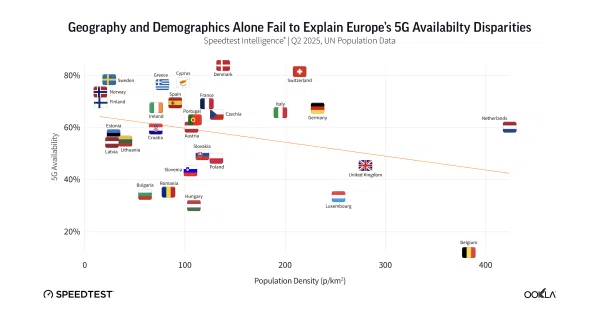
Europe’s 5G progress is accelerating but unevenly. Denmark, Sweden, and Spain lead with strong 5G availability and SA deployment, driven by early spectrum allocation and targeted policy. Meanwhile, the UK, Belgium, and Hungary trail due to regulatory delays, infrastructure bottlenecks, and weak investment. With the Digital Decade 2030 goal in sight, aligning on policy, spectrum, and subsidies will be key to closing the EU’s internal 5G divide.
Web3 is redefining the telecom industry by introducing decentralized infrastructure, blockchain-based billing, smart contracts, NFTs, and digital identity. This article explores how telcos can evolve from connectivity providers to key players in Web3 ecosystems—offering programmable services, token economies, and secure, user-centric digital experiences.
The integration of tariffs and the EU AI Act creates a challenging environment for the advancement of AI and automation. Tariffs, by increasing the cost of essential hardware components, and the EU AI Act, by increasing compliance costs, can significantly raise the barrier to entry for new AI and automation ventures. European companies developing these technologies may face a double disadvantage: higher input costs due to tariffs and higher compliance costs due to the AI Act, making them less competitive globally. This combined pressure could discourage investment in AI and automation within the EU, hindering innovation and slowing adoption rates. The resulting slower adoption could limit the availability of crucial real-world data for training and improving AI algorithms, further impacting progress.
In Driving Europe’s Digital Future, telecom leaders Margherita Della Valle (Vodafone), Christel Heydemann (Orange), and Tim Höttges (Deutsche Telekom) deliver a unified message: Europe must reform telecom regulation, invest in AI and infrastructure, and scale operations to remain globally competitive. From lagging 5G rollout to emerging AI-at-the-edge opportunities, they urge policymakers to embrace consolidation, cut red tape, and drive fair investment frameworks. Europe’s path to digital sovereignty hinges on bold leadership, collaborative policy, and future-ready infrastructure.
Smart mobility is reshaping how the world moves, powered by 5G, AI, and edge computing. From autonomous vehicles and real-time logistics to AI-driven drones and connected public transport, intelligent transportation systems are redefining urban mobility, logistics, and industrial automation. As global investment and collaboration grow, the transportation industry is transforming into a $11.1 trillion smart ecosystem focused on sustainability, efficiency, and connectivity.
In 2025, the ASEAN telecommunications sector is set for significant changes, driven by AI integration, digital infrastructure expansion, and strategic market consolidations. These transformations aim to enhance operational efficiency and profitability within the region's dynamic telecom landscape.
India’s telecom sector is rapidly evolving with AI and automation enhancing network operations, customer service, and 5G deployment. With over 125 million 5G users and major investments from companies like Reliance Jio and Bharti Airtel, AI technologies are proving essential for scalability and efficiency. Despite challenges like infrastructure integration and talent gaps, India’s growing AI ecosystem and government support are driving the future of smart telecom solutions.
Nvidia's Open Power AI Consortium is pioneering the integration of AI in energy management, collaborating with industry giants to enhance grid efficiency and sustainability. This initiative not only caters to the rising demands of data centers but also promotes the use of renewable energy, illustrating a significant shift towards environmentally sustainable practices. Discover how this synergy between technology and energy sectors is setting new benchmarks in innovative and sustainable energy solutions.
Explore the future of telecom investments as SK Telecom, Cisco, Coolpad, and Deutsche Telekom dive into AI and blockchain technologies. From SK Telecom's $10 million investment in Perplexity AI to Cisco's $1 billion AI fund, and Coolpad and Deutsche Telekom's ventures into Bitcoin mining, discover how these telecom giants are enhancing their services and operations.
TECKNEXUS PRIVATE NETWORKS
Congratulations to the 2026 Award Winners
Explore the Winners →

Partner Hubs

Telco AI Agent Leadership

Telco AI Agent Leadership Landscape - Network Equipment Vendors
Network Equipment Vendor Report
How are Amdocs, Salesforce, Comarch, Totogi, Qvantel, Oracle and other OSS/BSS vendors deploying telecom AI agents?
OSS/BSS Vendor Report
How are Amdocs, Salesforce, Comarch, Totogi, Qvantel, Oracle and other OSS/BSS vendors deploying telecom AI agents?
System Integrator Report
Scroll to Top