Private Network
Intelligence
Intelligence Journeys
Utilities Private Broadband Planning
AI Use Case Planning for Utilities

Google

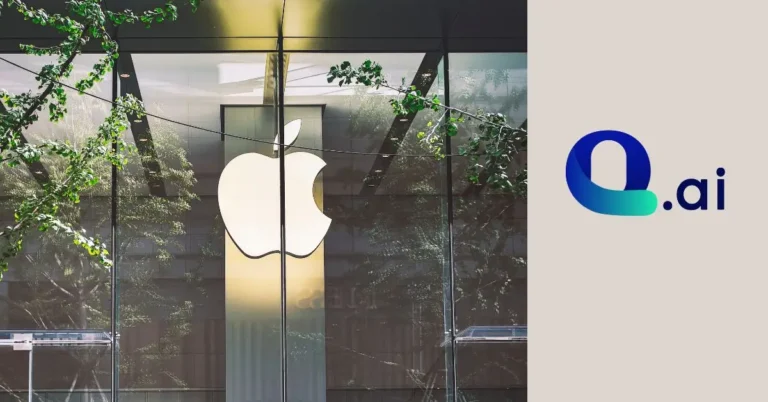
Apple’s purchase of Israeli start-up Q.ai accelerates its shift toward multimodal, audio-first wearables and tighter on-device AI. Apple acquired Q.ai, a Tel Aviv-based AI company operating in stealth since 2022, in a transaction reported around $2 billion, making it Apple’s second-largest acquisition after Beats. The move lands as Apple pushes a broader AI refresh across devices and services, including a reworked Siri due next month and a reported integration of Google’s Gemini into Apple Foundation Models. The core value is a human-computer interface designed to reduce friction between intent and AI execution. This enables “silent speech” and context awareness without overt voice commands or touch.
GlobalGPT’s new mobile app signals a step change in how multimodal AI is consumed—shifting advanced reasoning, image and video generation, and research assistance into a pocketable, enterprise-ready workflow. With app availability on Google Play and support for both Android and iOS ecosystems, enterprises can plan for cross-device continuity, enabling employees to start a task on desktop and continue on mobile with minimal friction. GlobalGPT routes user prompts to advanced models such as GPT-5.2, Claude Opus 4.5, and Gemini 3 Pro to tackle analysis, explanations, and decision support beyond basic Q&A.
As enterprises move from single-model chatbots to collaborative multi-agent systems, the economic and operational burden of reasoning at scale is becoming the dominant constraint. NVIDIA’s Nemotron 3 family introduces open models and tools designed to keep multi-agent systems fast, affordable and inspectable. The models use a hybrid latent mixture‑of‑experts design to activate only a fraction of parameters per token, combining it with a Mamba‑Transformer approach optimized for long sequences. Nemotron 3 Nano is a small, roughly 30B‑parameter model that activates up to 3B parameters per token, making it efficient for retrieval, summarization, assistants and software debugging.
Google has introduced a sharply priced AI Plus subscription in India to push generative AI into the mass market and counter OpenAI’s ChatGPT Go. The AI Plus plan launches at ₹199 per month for new users for six months, then moves to ₹399 per month. The bundle raises usage limits for Gemini 3 Pro, unlocks video generation within Google’s apps, expands NotebookLM’s “deep research” capabilities, and adds 200GB of storage across Google Photos, Drive, and Gmail. Family sharing is included, signaling a household-centric growth strategy.
Rogers Communications has moved from beta to a commercial footprint for satellite-to-mobile in Canada, extending basic connectivity and select apps to consumer smartphones while adding an industrial IoT tier for remote operations. The new Rogers Satellite service enables a curated set of popular apps to work beyond terrestrial coverage, including WhatsApp calling, Google Maps, AccuWeather, X, and CalTopo on most modern smartphones. In parallel, Rogers introduced satellite-to-mobile for IoT businesses, targeting asset tracking along highways and rail, as well as sensor telemetry in forestry, mining, and other resource sectors where terrestrial cellular is sparse.
Disney will invest $1 billion in OpenAI and become Sora’s first major content licensing partner, enabling fans to generate and share short videos that feature more than 200 characters and environments from Disney, Pixar, Marvel, and Star Wars. The agreement spans three years, excludes actor likenesses and voices, and extends to ChatGPT Images for IP‑compliant image generation. Disney will adopt OpenAI APIs across products and operations, including features for Disney+ and employee productivity, and may showcase select user creations on its streaming service. This agreement formalizes licensed synthetic media at scale and accelerates the convergence of UGC, premium IP, and AI tooling.
2025 has seen major telecom and tech M&A activity, including billion-dollar deals in fiber, AI, cloud, and cybersecurity. This monthly tracker details key acquisitions, like AT&T buying Lumen’s fiber assets and Google’s $32B move for Wiz, highlighting how consolidation is shaping the competitive landscape.
IBM has agreed to acquire Confluent for $31 per share in cash, signaling a decisive move to make real-time, governed data the backbone of generative and agentic AI across hybrid cloud environments. The transaction values Confluent at an enterprise value of roughly $11 billion, with closing targeted by mid-2026 pending shareholder and regulatory approvals. Together they aim to unify application, data, and AI pipelines across public clouds, private data centers, and edge locations—reducing integration friction and accelerating time to value for enterprise AI.
Amazon Web Services plans a sweeping expansion of classified and government cloud capacity to accelerate AI and high‑performance computing for U.S. agencies. AWS will invest up to $50 billion starting in 2026 to deliver purpose‑built AI and HPC infrastructure for federal customers. The buildout spans AWS Top Secret, AWS Secret, and AWS GovCloud (US) Regions. The expansion is designed to compress analysis timelines and enable AI‑assisted workflows across national security and civil missions. AWS is making a generational bet that AI and HPC, delivered inside accredited government regions at massive scale, will redefine how federal missions operate.
Ericsson’s latest Mobility Report points to a clear shift: operators are turning 5G capabilities into differentiated, SLA-backed services rather than just selling more data at higher speeds. After years of building coverage and capacity, 5G networks are mature enough to commercialize features like guaranteed latency, uplink boosts, and application-aware prioritization. The catalysts are in place: more 5G Standalone (SA) cores, rising traffic from video creation and immersive apps, and enterprise demand for predictable performance across sites and clouds. The net result is momentum behind premium, differentiated connectivity that can be priced, assured, and exposed to partners.
Reliance Jio has widened its Google AI bundle from a youth-focused offer to a network-wide benefit, signaling that AI services are becoming core to 5G monetization in India. Jio is extending a complimentary 18‑month subscription to Google’s premium AI plan—marketed around access to Gemini 3—to every Jio customer on an Unlimited 5G plan. The bundle centers on expanded access to Google’s latest Gemini experience, AI‑assisted features in Gmail and Docs, 2 TB of cloud storage across Photos, Drive, and Gmail, video generation powered by Google’s Veo technology, NotebookLM at elevated limits, and developer tooling such as Gemini Code Assist and Gemini CLI.
TECKNEXUS PRIVATE NETWORKS
Congratulations to the 2026 Award Winners
Explore the Winners →

Partner Hubs

Telco AI Agent Leadership

Telco AI Agent Leadership Landscape - Network Equipment Vendors
Network Equipment Vendor Report
How are Amdocs, Salesforce, Comarch, Totogi, Qvantel, Oracle and other OSS/BSS vendors deploying telecom AI agents?
OSS/BSS Vendor Report
How are Amdocs, Salesforce, Comarch, Totogi, Qvantel, Oracle and other OSS/BSS vendors deploying telecom AI agents?
System Integrator Report
Scroll to Top