IoT

The Internet of Things connects sensors, machines, and devices to networks so they can report data and be controlled remotely, underpinning applications from smart metering and asset tracking to industrial automation. Cellular IoT spans technologies from low-power NB-IoT and LTE-M to higher-bandwidth 5G, with new reduced-capability (RedCap) devices filling the gap between them. As deployments scale, the focus has shifted from connectivity alone to managing fleets of devices, securing them, and turning their data into value. For operators, IoT is a connectivity-plus-platform opportunity; for enterprises, it’s the foundation of connected operations. This channel covers IoT across cellular technologies, platforms, and industry verticals — including device classes, security, and data — with analysis of where connected-device deployments deliver measurable outcomes rather than stalling at the pilot stage.

Discover the future of stadium experiences with 5G and AI-powered digital mascots. From real-time interactions to personalized content, these innovative technologies are revolutionizing fan engagement in sports venues, creating immersive, multi-dimensional events that deepen brand connections and enhance the live event atmosphere.
PETRONAS, in partnership with Telekom Malaysia, has launched a Private 5G network at its Bintulu LNG Complex in Sarawak. This deployment aims to enhance operational efficiency and safety by integrating advanced technologies such as industrial IoT, AI, and robotics. The initiative is part of PETRONAS' broader strategy to modernize its operations and lead the digital transformation in the energy sector. The successful launch has received strong government support and sets a new standard for energy companies globally, as they increasingly adopt digital solutions to meet industry demands.
Nokia and Swisscom Broadcast are partnering to establish Switzerland's largest Drones-as-a-Service (DaaS) network, featuring 300 Drone-in-a-Box units. This deployment aims to improve public safety and industrial operations by offering quick, autonomous drone responses for emergencies and inspections. Utilizing advanced 3GPP technologies and edge computing, this network is designed to overcome Switzerland's unique operational challenges, ensuring reliable and efficient beyond visual line of sight (BVLOS) operations. This initiative builds on Nokia's successful drone deployment in Belgium and is set to revolutionize safety and efficiency across various sectors in Switzerland.
Event Start Date: 8th Oct, 2024
Event End Date: 10th Oct, 2024
Location: Las Vegas Convention Center, West Hall
Free Discovery Pass Code: FVPDEGBNPV
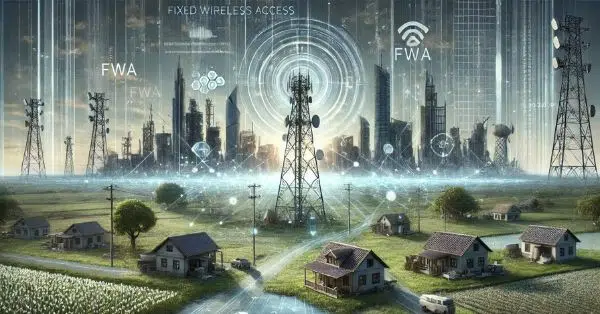
Fixed Wireless Access (FWA) is transforming the telecommunications landscape by offering cost-effective, high-speed internet solutions. Mobile Network Operators (MNOs) are leveraging FWA to extend broadband reach, especially in rural and underserved areas. This article examines the rise of FWA, the challenges MNOs face in its implementation, and future prospects.
Nokia and Telefónica have entered a three-year strategic agreement to deploy 100 private network solutions across Spain. This partnership aims to enhance digital transformation in key industries such as ports, manufacturing, and logistics by utilizing Nokia's Digital Automation Cloud and 5G capabilities. The collaboration is set to boost productivity, worker safety, and sustainability within the Spanish enterprise market.
Discover the top 9 trends transforming telecom inventory management in 2024. From predictive analytics and blockchain technology to AI-driven insights and IoT integration, these trends are optimizing operations, enhancing customer satisfaction, and promoting sustainability in the telecom industry.
In this episode of the 5G Guys podcast, hosts Wayne Smith and Dan McVaugh delve into the world of satellite connectivity with Tarun Gupta, co-founder of Skylo Technologies. Learn how Skylo is pioneering 5G and satellite integration to enhance IoT, SMS, and voice services globally. Discover the advantages of their standards-based approach and how it differentiates from other satellite services like Starlink and AST SpaceMobile.
Explore how private 5G/LTE networks are enhancing enterprise connectivity by offering enhanced security, scalability, and operational efficiency. Learn from a real-world case study of GXC Onyx's deployment in a manufacturing campus.
Vodafone's Generative AI strategy is transforming customer experiences and operational efficiency. Key highlights include:

SuperTOBi - Virtual Assistant: Vodafone's SuperTOBi, powered by Microsoft Azure OpenAI, enhances customer service by providing faster, accurate responses and supporting multiple languages. It significantly improves customer satisfaction rates.

Hotel Experience Transformation: Vodafone's virtual assistant, unveiled at FiturTechY, serves as a virtual receptionist, improving guest interactions and operational efficiency in hotels. Additionally, REM Data helps manage high-traffic areas and TechYRoom streamlines hotel maintenance tasks with voice-controlled automation.

VOXI AI Chatbot: VOXI's chatbot, developed with Accenture, offers human-like interactions and personalized support, significantly enhancing the customer service experience with faster resolutions and higher accuracy.

Microsoft Partnership: Vodafone's 10-year strategic partnership with Microsoft focuses on delivering hyper-personalized customer experiences, scaling IoT and digital services, and modernizing data centers, driving digital transformation and sustainability.

AI-Onboard in Automotive: Vodafone and Infinite Reality introduce AI-Onboard, merging Generative AI with AR and VR for an immersive automotive retail experience. This platform supports innovative payment systems and enhances customer engagement.

Vodafone's innovative use of Generative AI demonstrates its leadership in customer service, digital transformation, and operational efficiency.
Deutsche Telekom has implemented a private 5G network at Hamburger Containerboard's paper mill in Spremberg, Germany, enhancing operational efficiency and security across 350,000 square meters.
Ericsson's smart factory based in Texas, US builts 5G and advanced antenna systems radios. The smart factory is 25% more energy-efficient, produces 17% of required power on-site via solar panels, uses 40,000-gallon tanks to collect & reuse rainwater, and reduces shipping distance up to 5 times.

Frequently Asked Questions

What’s the difference between regular IoT and ‘massive IoT’?
Regular IoT typically refers to a moderate number of connected devices with meaningful data needs, like security cameras streaming video, smart home hubs, or connected vehicles transmitting diagnostic and location data continuously. Massive IoT refers to a fundamentally different scale: enormous numbers, potentially millions, of simple, low-power, low-data sensors, like utility meters, environmental monitors, or asset trackers, that each transmit only small amounts of data infrequently but need to remain connected reliably and cheaply across very large device populations. The distinction matters because massive IoT requires network technology specifically optimized for extremely low power consumption and the ability to support enormous device density per cell, priorities that differ from the higher bandwidth and lower latency priorities of more data-intensive regular IoT applications.
Why does 5G matter for IoT specifically?
5G matters for IoT in several specific ways beyond simply being a faster network. It’s designed to support a far greater density of connected devices per square kilometer than 4G, which matters enormously for massive IoT deployments involving huge numbers of sensors in a concentrated area. It also offers specialized operating modes tailored to different IoT needs: extremely low-power modes for simple sensors that need to run for years on a single battery, and ultra-reliable, low-latency modes for mission-critical applications like industrial robotics or autonomous systems where a delayed connection could cause real operational problems. This flexibility, supporting both massive numbers of simple devices and demanding, latency-sensitive applications on the same network, is a meaningful architectural advance over earlier cellular generations.
What are the biggest barriers to wider IoT adoption?
Several recurring barriers continue to limit how quickly IoT adoption scales. Device and connectivity costs, while falling steadily, still need to make economic sense across potentially millions of deployed units for many proposed use cases, and even small per-device costs add up quickly at that scale. Security concerns are significant, since managing the security of huge numbers of distributed, often physically unattended endpoints is meaningfully harder than securing a smaller number of centrally managed devices. Fragmented standards across different IoT use cases can complicate interoperability between devices and platforms from different manufacturers. Integrating the resulting flood of IoT data into existing business systems and deriving useful insight from it remains a genuine organizational challenge even after connectivity itself is solved.
How do cellular IoT connections compare to alternatives like Wi-Fi or LoRaWAN?
Cellular IoT, using carrier networks like 4G, 5G, NB-IoT, or LTE-M, offers wide-area mobility and carrier-grade reliability without requiring an organization to build its own local wireless infrastructure, making it well suited for devices that move across large areas or are deployed in remote locations without existing local coverage. Wi-Fi can be cheaper for localized deployments within a single building where infrastructure already exists, but doesn’t provide the same wide-area mobility without significant additional infrastructure. LoRaWAN and similar low-power wide-area technologies offer very long battery life and decent range at low cost, attractive for simple, infrequent-data sensors, but typically can’t support the data rates or mobility that cellular IoT can, and often require organizations to deploy their own gateway infrastructure.
What industries are the biggest users of IoT technology today?
Manufacturing has been one of the most active adopters of industrial IoT, using sensors throughout production lines for predictive maintenance, quality control, and real-time process monitoring. Logistics and supply chain companies rely heavily on IoT for asset tracking, monitoring shipment location and condition, like temperature for perishable goods, throughout transit. Agriculture uses IoT sensors to monitor soil conditions, irrigation needs, and livestock health across large rural areas where cellular IoT’s wide coverage is particularly valuable. Utilities use IoT extensively for smart metering and grid monitoring. Healthcare is an increasingly significant adopter too, using connected medical devices and wearables for remote patient monitoring, an application where reliability and security carry particularly high stakes.
How is AI changing what IoT devices and networks can do?
AI is increasingly applied directly to the enormous volumes of data IoT devices generate, since manually analyzing data from potentially millions of sensors isn’t practically possible without automated analysis. AI models are used to detect anomalies in sensor data that might indicate equipment about to fail, to optimize complex systems like energy grids or supply chains based on real-time data from many distributed sensors, and increasingly, to run directly on IoT devices themselves through on-device or edge AI, allowing analysis and decision-making to happen locally rather than requiring every piece of raw data to be transmitted back to a central system. This local processing is particularly valuable where bandwidth is limited or sending all raw data back centrally would be impractical given the volume involved.
What is ‘NB-IoT’ and ‘LTE-M,’ and how do they differ from regular cellular connections?
NB-IoT, short for Narrowband IoT, and LTE-M, short for LTE Machine-Type Communication, are specialized cellular technologies designed specifically for IoT use cases rather than general smartphone-style connectivity. They prioritize extremely low power consumption, allowing devices to run for years on a single battery, and excellent coverage, including reaching devices in challenging locations like deep indoors or underground, over the higher data speeds standard cellular connections prioritize. The two differ in their tradeoffs: NB-IoT generally supports even lower power consumption and better extreme-condition coverage, suited for simple, infrequent-data sensors, while LTE-M supports somewhat higher data rates and mobility, making it better suited for applications like asset tracking that need to maintain a connection while moving.
What security risks are specific to IoT devices, and why are they considered higher risk?
IoT devices are often considered higher security risk for several specific reasons. Many are deployed in huge numbers across physically unattended or hard-to-access locations, making it impractical to manually monitor or service the security of each individual unit. Cost pressures in massive IoT deployments can lead manufacturers to cut corners on security to keep per-unit costs low, sometimes resulting in weak default passwords, infrequent software updates, or limited encryption. Because IoT devices are often deployed for many years without replacement, vulnerabilities discovered after deployment can remain unpatched for extended periods if devices lack reliable update mechanisms. The sheer scale of many deployments also means a single vulnerability could potentially compromise an unusually large number of devices simultaneously.


Your Brand. Our Intelligence Tools.

Capture leads at the point of evaluation. Talk to Us →

Sponsored by Palo Alto Networks
⚡ Utilities ⏱ 8 min ✓ Free
This tool is built and hosted by TeckNexus.
Launch Tool →
Whitepaper
This whitepaper explains how utilities can use secure AI-enabled private mobile networks to modernize operations, support distributed intelligence, improve resilience, and strengthen cybersecurity across critical infrastructure. It covers AI applications, private network advantages, zero trust principles, multilayered security architecture, and governance considerations for AI-ready utility environments....
Whitepaper
Non-terrestrial networks are rapidly evolving from experimental satellite systems into an increasingly important part of the global 5G connectivity landscape. This eBook, developed by Radisys in collaboration with TeckNexus, explores how 3GPP standardization, satellite architecture innovation, and software-driven network design are reshaping NTN deployment models. It examines the transition from...
Whitepaper
Private cellular networks are transforming industrial operations, but securing private 5G, LTE, and CBRS infrastructure requires more than legacy IT/OT tools. This whitepaper by TeckNexus and sponsored by OneLayer outlines a 4-pillar framework to protect critical systems, offering clear guidance for evaluating security vendors, deploying zero trust, and integrating IT,...
Scroll to Top