

AI Agent Competitive
Intelligence
Intelligence
Private Network
Intelligence
Intelligence
Intelligence Journeys
Utilities Private Broadband Planning
AI Use Case Planning for Utilities
Intelligence Tools
By Tool Type
▼
By Industry
▼
Access Type
▼
Resources
▼
Technology Hubs
▼
Partner Hubs
▼
Monthly Trackers
▼


Home » Digital Twin » Page 4
Digital Twin
A digital twin is a live virtual model of a physical asset, network, or environment, continuously updated with real data so it can be monitored, simulated, and optimized. In telecom, operators use network digital twins to plan deployments, test changes, and run “what-if” scenarios before touching live infrastructure; in enterprise settings, twins model factories, ports, and facilities that private networks connect. Combined with AI, digital twins support predictive maintenance, automated optimization, and safer experimentation across complex systems. For operators and enterprises, the appeal is reducing risk and cost by testing in simulation rather than production. This channel tracks digital twin technology across networks and connected industries — planning, simulation, and operations — with analysis of where twins are delivering practical value and how they connect to private networks, edge, and AI-driven automation.
- Usecase
- September 9, 2025
- Hema Kadia

Maher Terminals has deployed Nokia’s Private 4G and Edge computing solutions to digitize operations at its 450-acre New Jersey facility. By partnering with Nokia and Future Technologies Venture LLC, the terminal now uses real-time data and rugged industrial devices to streamline cargo handling and enhance network reliability.
- Tech News & Insight
- August 29, 2025
- Hema Kadia

Salesforce is moving to close the gap between slick AI demos and operational reality by stress-testing agents inside simulated business environments before they ever touch production. Salesforce introduced CRMArenaPro (a digital twin for enterprise workflows), an Agentic Benchmark for CRM (to compare agents across business-centric metrics), and new Account Matching capabilities (to unify records and clean underlying data). The Agentic Benchmark for CRM evaluates accuracy, cost, speed, trust and safety, and environmental sustainability. Stand up a sandbox that mirrors production and run agents through end-to-end scenarios with synthetic-but-realistic data. Tighten OAuth and third-party risk controls before expanding agent privileges
- Tech News & Insight
- August 13, 2025
- Hema K

A new joint solution from Rohde & Schwarz (R&S) and the Taiwan Space Agency (TASA) consolidates electromagnetic compatibility (EMC) and antenna measurements into a single, production-grade test chamber, signaling a shift in how satellite payloads will be validated for Non-Terrestrial Network (NTN) and mission-critical services. By integrating both disciplines in one chamber, TASA can validate RF performance, emissions, and immunity under consistent test conditions and configurations, improving time-to-launch and de-risking interoperability with terrestrial networks. The TASA deployment combines R&S hardware, software, and engineering with a locally built Compact Antenna Test Range (CATR) reflector to achieve dual-mode EMC and antenna measurements in one chamber.
- Partner Event
- July 9, 2025
- Hema Kadia

Start: Oct 14, 2025
End: Oct 15, 2025
Venue: Fontainebleau Las Vegas
Location: Las Vegas
End: Oct 15, 2025
Venue: Fontainebleau Las Vegas
Location: Las Vegas
- Tech News & Insight
- July 5, 2025
- Hema Kadia

Virgin Media O2’s multi-year transformation redefines UK telecoms with digitalization, AI, and customer-first thinking. From legacy network upgrades and automation to AI tools like Daisy and Digital Twins, the operator’s strategy focuses on trust, reliability, and sustainable growth.
- Tech News & Insight
- June 27, 2025
- Hema Kadia
5G Advanced and AI are reshaping utility private networks into hyper-intelligent, resilient grids. Learn how edge AI, programmable networks, digital twins, and human-in-the-loop automation will enable predictive maintenance, real-time grid optimization, and new energy services.
- Tech News & Insight
- June 26, 2025
- Hema Kadia

Private LTE and 5G networks are transforming how utilities operate by enabling a wide range of mission-critical and emerging applications. From AMI and substation automation to drone inspections and edge AI, this post outlines 12 strategic use cases that demonstrate why utilities are investing in private cellular infrastructure to improve safety, performance, and operational agility across the grid.
- Usecase
- June 2, 2025
- Hema Kadia
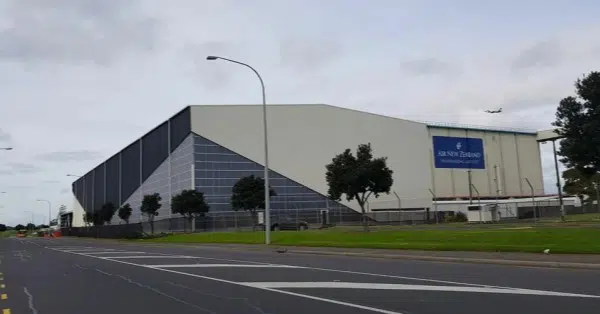
Spark and Air New Zealand have activated New Zealand’s first Private 5G Network for business operations at Auckland Airport’s logistics warehouse. Using Ericsson’s enterprise-grade 5G, the network powers a drone-robot system that automates stocktakes, keeps staff safer by removing the need for high-shelf manual scanning, and provides real-time inventory data to boost efficiency. This smart warehousing solution sets a new benchmark for airport logistics and supply chain innovation in New Zealand.
- Tech News & Insight
- May 30, 2025
- Hema Kadia

Deutsche Telekom, Orange, and the Linux Foundation outline their 2025 cloud-native telecom roadmap, highlighting Kubernetes-native workloads, AI integration, observability, and zero-trust security models. Learn how open-source tooling, GitOps automation, and cultural transformation are reshaping next-gen telco operations.
- Tech News & Insight
- April 21, 2025
- Hema Kadia

ETSI has published its first ISAC report for 6G—ETSI GR ISC 001—highlighting 18 use cases across healthcare, public safety, automation, and mobility. The report dives into deployment scenarios, sensing modalities, and KPIs like fine motion accuracy and sensing latency. It also outlines security, privacy, and sustainability guidelines for real-world ISAC integration into 6G networks.
- Tech News & Insight
- April 15, 2025
- Hema Kadia

NVIDIA has launched a major U.S. manufacturing expansion for its next-gen AI infrastructure. Blackwell chips will now be produced at TSMC’s Arizona facilities, with AI supercomputers assembled in Texas by Foxconn and Wistron. Backed by partners like Amkor and SPIL, NVIDIA is localizing its AI supply chain from silicon to system integration—laying the foundation for “AI factories” powered by robotics, Omniverse digital twins, and real-time automation. By 2029, NVIDIA aims to manufacture up to $500B in AI infrastructure domestically.
Frequently Asked Questions
What is a digital twin, in practical terms?
In practical terms, a digital twin is a software model that mirrors a real physical object, system, or process closely enough, and updates frequently enough using real sensor data, that decisions can be tested against the model with meaningful confidence they’ll reflect what would actually happen in reality. Unlike a static 3D model or design blueprint, a digital twin is meant to be continuously synchronized with its physical counterpart, reflecting current conditions rather than a fixed, one-time snapshot. This makes it possible to ask ‘what happens if’ questions, like what happens if we reroute network traffic this way, and get a reasonably reliable answer without actually making that change to the real, physical system first.
How are digital twins used in telecom networks specifically?
Telecom operators build digital twins of their own networks, modeling everything from radio coverage and capacity to the behavior of virtualized core network functions, to simulate the impact of potential changes before deploying them on a live, customer-facing network. This might mean testing how a planned software update will affect performance, modeling how traffic would be rerouted during maintenance, or simulating how adding capacity in one area might affect neighboring cells, all without risking an actual outage if the simulation reveals an unexpected problem. As networks become more complex with virtualization and multi-vendor components, digital twins are increasingly valuable for catching configuration mistakes before they reach the live network.
What industries outside telecom use digital twins heavily?
Manufacturing uses digital twins extensively to simulate entire factory floors, testing how changes to production line layout would affect output before making physical changes, and to predict equipment failures by modeling wear patterns from real sensor data. Smart city initiatives use digital twins to model traffic flow, energy grids, and infrastructure systems, helping planners simulate the effects of new development before implementation. Logistics companies use digital twins to model warehouse operations and transportation networks, optimizing routes and inventory placement. Aerospace and automotive industries, where the concept originated, use digital twins extensively for design and ongoing maintenance, modeling how individual aircraft or vehicles age based on their specific real-world usage.
Why do digital twins need low-latency, high-bandwidth connectivity to work well?
A digital twin is only as useful as how current its underlying data is; if sensor data takes too long to reach the model, simulations and predictions end up being based on stale information that no longer reflects actual real-world conditions, undermining the entire premise of using the twin to make confident decisions. This is particularly critical for digital twins modeling fast-changing systems, like network traffic patterns or industrial equipment operating in real time, where conditions can shift meaningfully within seconds. Low-latency, high-bandwidth connectivity, often provided through 5G, private networks, or edge computing, ensures the constant stream of sensor data feeding a digital twin arrives quickly enough for the model to remain genuinely accurate.
What’s the difference between a digital twin and a simple simulation or 3D model?
A simple 3D model or simulation is typically a static or one-time representation, useful for visualization or testing a specific scenario at a fixed point in time, but it doesn’t automatically update as real-world conditions change. A digital twin, by contrast, is specifically designed to be continuously synchronized with its physical counterpart through an ongoing stream of real sensor data, meaning the model reflects current, evolving conditions rather than a fixed snapshot from whenever it was created. This continuous synchronization is what allows a digital twin to support ongoing operational decisions and predictive maintenance, rather than just one-time design validation, which is generally the more limited role a static simulation plays.
How accurate do digital twins actually need to be to be useful?
The required level of accuracy depends heavily on what decisions the digital twin is meant to support; a twin used for high-level capacity planning might tolerate more approximation than one used to predict the exact moment a piece of critical equipment is likely to fail. In practice, most digital twins involve a deliberate trade-off between modeling fidelity and the cost and complexity of building and maintaining that level of detail, since a perfectly accurate model of every possible variable would often be prohibitively expensive to build and keep updated. Organizations typically aim for the twin to be accurate enough that decisions made based on its predictions reliably hold up in the real world for the specific use case at hand.
What role does AI play in digital twin technology?
AI plays an increasingly central role in digital twin technology, particularly in interpreting the large volumes of sensor data feeding the twin and identifying patterns that wouldn’t be obvious through simple rule-based monitoring. Machine learning models are commonly used to predict equipment failures based on subtle patterns in sensor data that precede a breakdown, to optimize complex systems by testing many possible scenarios within the twin far faster than a human planner could manually evaluate, and increasingly, to generate realistic predictions about how a system would behave under conditions that haven’t actually been observed yet. This combination is what allows modern digital twins to move beyond simple visualization toward genuinely predictive, decision-supporting tools.
What are the biggest challenges in building and maintaining a digital twin?
Building and maintaining an accurate digital twin presents several recurring challenges. Gathering sufficiently detailed, reliable real-world sensor data across a complex system, especially older infrastructure not originally designed with extensive sensor instrumentation, can require significant upfront investment in new sensors and connectivity. Keeping the model genuinely synchronized with reality over time requires reliable, low-latency data pipelines that can become a meaningful technical undertaking in their own right, particularly at scale. There’s also an ongoing maintenance burden, since a digital twin that gradually drifts out of sync with its real-world counterpart can become actively misleading rather than simply less useful.




Telco AI Agent Leadership

