

AI Agent Competitive
Intelligence
Intelligence
Private Network
Intelligence
Intelligence
Intelligence Journeys
Utilities Private Broadband Planning
AI Use Case Planning for Utilities
Intelligence Tools
By Tool Type
▼
By Industry
▼
Access Type
▼
Monthly Trackers
▼
Resources
▼
Technology Hubs
▼
Partner Hubs
▼


AR
Augmented reality overlays digital content onto the physical world through glasses, headsets, or mobile devices, and depends heavily on connectivity for low-latency, high-bandwidth experiences. In telecom and enterprise contexts, AR is moving past consumer novelty toward practical industrial uses — remote assistance, maintenance guidance, training, and field operations — where it intersects directly with private networks, edge computing, and 5G. The technology’s network demands make it a recurring test case for low-latency connectivity and edge processing, and a driver of interest in standalone 5G and on-premises deployments. For operators and enterprises, the question is which AR use cases justify their connectivity and infrastructure requirements. This channel covers augmented reality where it meets networks: enterprise and industrial deployments, device developments, and the connectivity and edge requirements that make immersive experiences viable at scale.
- Usecase
- June 19, 2023
- Hema Kadia

Experience the revolution in airport operations as Aena and Cellnex Telecom pilot a 5G private network at San Sebastian Airport, laying the groundwork for advanced applications, improved efficiency, and sustainable service.
- News
- May 22, 2023
- TeckNexus Editorial

Meta Platforms is in negotiations with Magic Leap for a possible long-term collaboration. While this partnership could aid Meta's metaverse goals, Magic Leap's waveguide technology, despite its flaws, is regarded as valuable. This comes as Meta continues investing in the metaverse despite investor dissatisfaction, and as it strives to reduce reliance on Chinese manufacturing.
- Article & Insights
- May 16, 2023
- Hema Kadia

This edition is dedicated to "Shaping the Future with Connectivity and Tech," a theme that truly encapsulates the transformative power of technology in our lives. In this edition, we delve into the multifaceted world of 5G, AI, AR/VR, IoT, and other emerging technologies rapidly revolutionizing various aspects of our society, from our workplaces to our shopping experiences to industrial sectors.
- Article & Insights
- May 16, 2023
- Hema Kadia

The article explores the transformative impacts of 5G networks and augmented reality (AR) / virtual reality (VR) on consumer interactions, shopping habits, and entertainment preferences. These technologies enhance the user experience with real-time, immersive applications, consequently reshaping purchasing decisions and engagement with brands. Industries like retail and entertainment have embraced this shift, offering immersive and interactive experiences like virtual try-ons and immersive gaming. Moreover, sectors such as healthcare and education have harnessed these technologies to increase accessibility and improve service delivery. However, the article also highlights challenges such as privacy, security, and the potential digital divide. It emphasizes the importance of inclusive technologies and services, as well as the ethical use of these technologies, advocating for industry standards and best practices to ensure equitable benefits and minimize negative impacts.
- Article & Insights
- May 16, 2023
- Hema Kadia
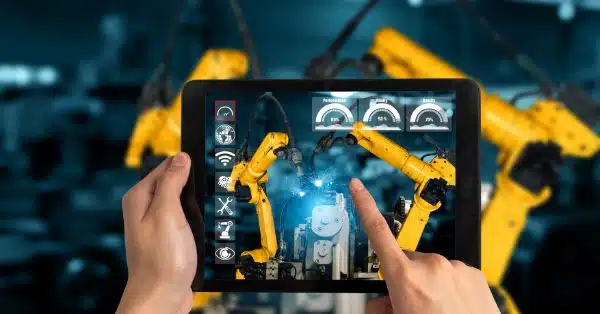
The article explores how 5G, AI, and AR/VR are transforming a range of vertical industries, including manufacturing, transportation, energy and utilities, healthcare, education, retail, mining, agriculture/agritech, and smart cities. It highlights the benefits of these technologies, including increased efficiency and productivity, improved customer satisfaction, and new opportunities for growth. The article also discusses the challenges associated with these technologies, including privacy and security concerns and accessibility issues. The article concludes by emphasizing the importance of inclusive technologies and services, and the responsible and ethical use of these technologies, in order to ensure that the benefits of 5G, AI, and AR/VR are accessible to all and used for the betterment of society.
- Article & Insights
- May 16, 2023
- Hema Kadia

The digital twin revolution is changing how businesses optimize their operations by using virtual models to simulate, predict, and enhance real-world processes. Digital twins provide numerous benefits, such as enhanced performance and efficiency, predictive maintenance, improved decision-making, reduced time-to-market, and better collaboration. With use cases across industries like manufacturing, energy and utilities, transportation and logistics, healthcare, and smart cities, digital twin technology is becoming increasingly important for businesses. However, organizations must address challenges related to data quality, integration, security, cost, and expertise to implement and benefit from digital twin technology successfully.
- News
- May 1, 2023
- Hema Kadia

Vodafone introduces the UK's first 5G standalone (SA) mobile private networking (MPN) service, offering customizable network solutions and paving the way for specialized services.
- News
- April 28, 2023
- Hema Kadia

T-Mobile US has chosen nine start-ups to participate in its annual Accelerator Programme, which this year aims to foster innovative 5G experiences for sports and live events.
- Podcast
- April 4, 2023
- 5G Techritory

Keeping up with the pace of innovations and new technologies has proven to be quite a challenge for lawmakers and regulators. While the physical and digital worlds can be difficult to regulate, another challenge is looming on the horizon – the metaverse. In this session, you will hear how these experts approach the technologies on a local and regional level so that they don’t hinder advancement but rather provide a benefit for society.
- Usecase
- March 19, 2023
- Hema Kadia

German chemical firm BASF plans to establish a private 5G network at a facility in Belgium's Port of Antwerp, partnering with local networking expert Citymesh. This development, which follows a series of cellular-connected Industry 4.0 trials in the region, has been dubbed "the first private 5G network" in the port by local media.

Frequently Asked Questions
What’s the difference between AR and VR, and where does ‘mixed reality’ fit in?
Augmented Reality overlays digital content onto a person’s existing view of the real world, like navigation arrows appearing through a phone camera, while Virtual Reality replaces a person’s entire field of view with a fully simulated digital environment, typically through a headset that blocks out physical surroundings. Mixed Reality sits conceptually between the two, generally referring to experiences where digital objects don’t just sit on top of the real world but actually interact with it, responding to physical surfaces, objects, and lighting in ways that make them feel genuinely present in the room. In practice, the terms are sometimes used loosely, but whether the real world remains visible and primary, or is replaced entirely, is the most reliable way to tell them apart.
Why does AR specifically need fast, low-latency networks to work well?
AR applications work by continuously analyzing a live camera feed and rendering digital content that appears to exist within that real-world view, often updating dozens of times per second as a user moves their phone or head. Any meaningful network delay between capturing real-world data and rendering the corresponding digital overlay causes a visible, often disorienting mismatch, where a virtual object appears to lag behind or drift away from the real-world surface it’s supposed to be anchored to. This sensitivity to latency becomes more pronounced as AR experiences offload heavy processing, like advanced object recognition, to cloud or edge servers, since that offloading only works smoothly if the round-trip network delay stays low enough to feel instantaneous.
What industries are using AR seriously, beyond consumer gaming and filters?
Beyond consumer gaming and social media filters, AR has found genuinely practical traction in several enterprise contexts. Manufacturing and field service use AR to guide technicians through complex repairs, often overlaying step-by-step instructions directly onto the equipment being worked on, or connecting a technician with a remote expert who can annotate what they see in real time. Retail uses AR for virtual try-on experiences. Healthcare uses AR for surgical visualization, overlaying imaging data directly onto a patient during a procedure, and for medical training. Logistics and warehousing use AR for picking and inventory tasks, highlighting correct item locations directly in a worker’s field of view.
Do I need special hardware for AR, or does it work on a regular phone?
Basic AR functionality works on most modern smartphones and tablets, using the device’s camera, screen, and onboard processing to render overlays without any additional hardware, which is how the vast majority of consumer AR experiences are delivered today. More immersive, hands-free AR, where digital content appears directly in a person’s field of view without holding up a phone, generally requires dedicated smart glasses or AR headsets. This category remains considerably less mature than VR headsets, facing ongoing challenges around battery life, display quality, weight and comfort for all-day wear, and price, which is part of why most AR adoption to date has happened through smartphones.
How does 5G specifically improve AR experiences compared to 4G?
5G improves AR primarily through lower latency and higher, more consistent bandwidth compared to 4G, both directly addressing AR’s core technical requirements. Lower latency means digital overlays stay more accurately anchored to the real world, even as more processing work gets offloaded to cloud or edge servers rather than handled entirely on the device. Higher bandwidth supports richer, higher-resolution AR content and makes multi-user, shared AR experiences more technically feasible. 5G’s support for network slicing adds another potential benefit, allowing an AR application to request a dedicated, guaranteed-performance connection rather than competing for capacity with all other network traffic.
What’s ‘AR cloud’ or ‘edge-assisted AR,’ and why does it matter?
AR cloud and edge-assisted AR both refer to the practice of offloading some of AR’s heavy computational work, like recognizing objects in a scene or rendering complex digital content, from the user’s device to more powerful servers, either in the cloud or, increasingly, at the network edge closer to the user. This matters because lightweight AR devices, particularly smart glasses, generally don’t have the processing power or battery capacity to handle sophisticated AR experiences entirely on their own. By offloading that work to nearby edge servers, AR applications can deliver more advanced experiences on lighter, cheaper hardware, provided the network connection is fast and low-latency enough to make that round trip feel instantaneous.
What’s holding back widespread adoption of dedicated AR hardware like smart glasses?
Several practical barriers continue to slow adoption of dedicated AR hardware. Battery life remains a persistent constraint, since the combination of cameras, displays, and processing needed for compelling AR experiences draws significant power in a form factor expected to be lightweight and comfortable for extended wear. Display technology capable of producing bright, high-resolution overlays in a glasses-sized form factor is still maturing and expensive to manufacture at scale. Social acceptance is another factor, since wearing a visibly camera-equipped device in public raises privacy concerns for the people around the wearer. Price also remains a barrier for mainstream consumers.
How is AR different from the broader ‘metaverse’ concept?
AR and the broader metaverse concept are related but not synonymous. AR specifically refers to overlaying digital content onto the real world, typically through a phone, tablet, or AR glasses, while the metaverse concept describes persistent, often fully virtual or mixed-reality environments that people can inhabit and interact with, more commonly associated with VR headsets and fully simulated 3D worlds. AR can be one piece of a broader metaverse vision, letting someone see virtual objects or avatars overlaid onto their actual surroundings rather than requiring a fully immersive headset, but AR itself doesn’t require the persistent, shared, virtual-world framing that defines metaverse discussions.




Telco AI Agent Leadership

