AI Agent Competitive
Intelligence
Intelligence
Private Network
Intelligence
Intelligence
Intelligence Journeys
Utilities Private Broadband Planning
AI Use Case Planning for Utilities
Intelligence Tools
By Tool Type
▼
By Industry
▼
Access Type
▼
Resources
▼
Technology Hubs
▼
Partner Hubs
▼
Monthly Trackers
▼


5G
5G is the fifth generation of cellular technology and the current global standard, succeeding 4G LTE with faster speeds, lower latency, and the capacity to connect far more devices per cell. Standardized by 3GPP from around 2017 and launched commercially in 2019, it has become the dominant connectivity technology across most major markets. 5G spans low-, mid-, and high-band (mmWave) spectrum and two architectures — non-standalone, which runs on a 4G core, and standalone, which unlocks network slicing and the lowest latency. The standard continues to evolve through 5G-Advanced, adding AI-native management and tighter satellite integration. For enterprises and operators, the questions have shifted from coverage to monetization, private deployments, and standalone migration. This channel tracks 5G developments across vendors, operators, and enterprise verticals, with analysis and decision tools for teams evaluating real deployments.
- Tech News & Insight
- June 26, 2025
- Hema Kadia

Utilities are implementing private LTE and 5G networks across diverse environments—from turbine halls and substations to national grid systems. This blog outlines the key deployment architectures (site-specific, regional, wide-area, and indoor) and spectrum strategies utilities are using to deliver secure, scalable, and purpose-built connectivity for modern energy operations.
- Tech News & Insight
- June 26, 2025
- Hema Kadia

The shift to private LTE and 5G in utilities is being driven by a convergence of urgent trends, from climate mandates and cyber threats to legacy infrastructure and labor shortages. This blog explores six key forces accelerating private network adoption and highlights why resilient, intelligent, and secure communications have become essential to utility transformation.
- Tech News & Insight
- June 26, 2025
- Hema Kadia

Private LTE and 5G networks are transforming how utilities operate by enabling a wide range of mission-critical and emerging applications. From AMI and substation automation to drone inspections and edge AI, this post outlines 12 strategic use cases that demonstrate why utilities are investing in private cellular infrastructure to improve safety, performance, and operational agility across the grid.
- Tech News & Insight
- June 26, 2025
- Hema Kadia
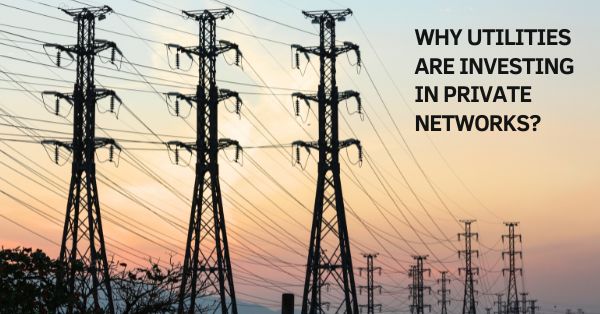
As the energy grid becomes more distributed and digital, utilities are investing in private LTE and 5G networks to future-proof their operations. These purpose-built networks support secure, real-time communications, improve operational visibility, and enable automation, delivering the connectivity backbone required for a modern, resilient grid.
- Usecase
- June 25, 2025
- Hema Kadia

Verizon Business and Nokia will deploy six private 5G networks across Thames Freeport’s major logistics sites, including the Port of Tilbury, London Gateway, and Ford Dagenham to create a high-performance digital infrastructure supporting real-time logistics, AI automation, and edge computing. With plans to generate 5,000 skilled jobs and power sustainable trade, this initiative positions Thames Freeport as a next-gen smart trade corridor.
- Usecase
- June 23, 2025
- Hema Kadia

Hrvatski Telekom’s NextGen 5G Airports project will deploy Private 5G Networks at Zagreb, Zadar, and Pula Airports to boost safety, efficiency, and airport automation. By combining 5G Standalone, Edge Computing, AI, and IoT, the initiative enables drones, smart cameras, and AI tablets to digitize inspections, secure perimeters, and streamline operations, redefining aviation connectivity in Croatia.
- Podcast
- June 22, 2025
- Hema Kadia

Private 5G in South Korea is reshaping manufacturing by enabling autonomous robots, real-time quality control, and AI-driven operations. This video podcast explains how dedicated spectrum, practical deployment models, and flexible pricing help factories justify Private 5G over Wi-Fi, plus insights on scaling ROI and future AI-native networks.
- Tech News & Insight
- June 19, 2025
- Hema Kadia

Edge AI is reshaping broadband customer experience by powering smart routers, proactive troubleshooting, conversational AI, and personalized Wi-Fi management. Learn how leading ISPs like Comcast and Charter use edge computing to boost reliability, security, and customer satisfaction.
- Tech News & Insight
- June 16, 2025
- Suyash Rai

The emergence of 6G networks marks a paradigm shift in the way wireless systems are conceived and managed. Unlike its predecessors, 6G will embed Artificial Intelligence (AI) as a native capability across all network layers, enabling real-time adaptability, intelligent orchestration, and autonomous decision-making. This paper explores the symbiosis between AI and 6G, highlighting key applications such as predictive analytics, alarm correlation, and edge-native intelligence. Detailed insights into AI model selection and architecture are provided to bridge the current technical gap. Finally, the cultural and organizational changes required to realize AI-driven 6G networks are discussed. A graphical abstract is suggested to visually summarize the proposed architecture.
- Tech News & Insight
- June 16, 2025
- Robert James Armstrong

Telecom engineers know OSS systems aren’t broken—they just pretend to work. Outdated data, broken integrations, and overwhelming alerts create false confidence and slow operations. Discover how VC4’s Service2Create delivers real-time, trusted inventory and smarter workflows that engineers can actually rely on.
- Tech News & Insight
- June 16, 2025
- Suyash Rai

As the telecom world accelerates toward 5G-Advanced and sets its sights on 6G, artificial intelligence (AI) is no longer a peripheral technology — it is becoming the brain of the mobile network. AI-driven Radio Access Networks (RANs), and increasingly AI-native architectures, are reshaping how operators design, optimize, and monetize their networks. From zero-touch automation to intelligent spectrum management and edge AI services, the integration of AI and machine learning (ML) is unlocking both operational efficiencies and new business models.
This article explores the evolution of AI in the RAN, the architectural shifts needed to support it, the critical role of Open RAN, and the most promising AI use cases from the field. For telcos, this is not just a technical upgrade — it is a strategic inflection point.
This article explores the evolution of AI in the RAN, the architectural shifts needed to support it, the critical role of Open RAN, and the most promising AI use cases from the field. For telcos, this is not just a technical upgrade — it is a strategic inflection point.
Frequently Asked Questions
What actually makes 5G different from 4G LTE?
5G introduces three core technical improvements over 4G LTE: significantly higher peak data speeds, in some cases multiple gigabits per second under ideal conditions compared to 4G’s typical tens to low hundreds of megabits per second; substantially lower latency, the delay between sending and receiving data, which matters for applications like gaming, video calls, and industrial automation where responsiveness is critical; and far greater device density support, allowing a single cell site to maintain reliable connections with a much larger number of simultaneous devices, which matters increasingly as IoT sensors and connected devices proliferate. These improvements come from a combination of new radio technology, additional spectrum bands made available for 5G use, and a redesigned network architecture that’s considerably more flexible and software-driven than 4G’s architecture was.
What’s the difference between low-band, mid-band, and high-band (mmWave) 5G?
Low-band 5G uses similar frequencies to 4G LTE, offering wide coverage area and good building penetration but speeds not dramatically faster than good 4G performance, making it most useful for extending broad geographic coverage rather than delivering 5G’s headline speed improvements. Mid-band 5G offers a more balanced tradeoff between coverage and speed, generally delivering meaningfully faster performance than 4G across a reasonably wide area, and has become the most common band used for mainstream 5G deployment in most markets globally. High-band 5G, often called mmWave, delivers by far the fastest possible speeds, but its very short range and poor ability to penetrate walls means it’s typically deployed only in dense, high-traffic urban areas like stadiums, rather than for broad area coverage.
What’s the difference between 5G NSA (non-standalone) and 5G SA (standalone)?
5G non-standalone, or NSA, runs 5G radio technology on top of an existing 4G core network, meaning certain control functions still rely on 4G infrastructure even though the actual data connection itself uses 5G radio technology; this was the faster, easier path many operators took for their initial 5G launches, since it could be deployed by upgrading existing 4G infrastructure rather than building an entirely new core network from scratch. 5G standalone, or SA, uses an entirely new, independently functioning 5G core network rather than relying on 4G at all, unlocking more of 5G’s distinctive advanced capabilities, including network slicing and the lowest possible latency, that NSA architecture generally can’t fully support. Many operators have been gradually transitioning from NSA to SA, though this migration has generally taken longer than initially anticipated.
How widespread is 5G coverage and adoption globally in 2026?
5G has become genuinely widespread rather than experimental. Global subscriptions surpassed 3.1 billion in early 2026, with another 162 million subscriptions added in just the first quarter of the year, reflecting continued strong growth even years after 5G’s initial 2019 commercial launch. Coverage varies considerably by region and band: low and mid-band 5G now reaches the substantial majority of the population in most major markets including the U.S., much of Europe, China, and South Korea, while high-band mmWave coverage remains considerably more limited and concentrated in dense urban areas given its short range. Adoption has progressed furthest in markets with aggressive early infrastructure investment, particularly China and South Korea, while other regions, especially parts of the developing world, continue working through earlier stages of 5G buildout.
What is ‘5G-Advanced,’ and how is it different from regular 5G?
5G-Advanced, sometimes marketed by certain vendors and operators, particularly in China, as 5.5G, refers to the next phase of 5G standards development beyond the original 2019 specification, formalized starting with 3GPP Release 18 and continuing through subsequent releases. It introduces capabilities including better support for reduced-capability IoT devices that don’t need full 5G performance, tighter integration with non-terrestrial satellite networks, more sophisticated AI-native network management built directly into the standard, and further uplink and capacity improvements beyond the original 5G specification. Rather than representing a completely new generation the way 5G itself was relative to 4G, 5G-Advanced is best understood as a substantial, ongoing evolution and refinement of the existing 5G standard, extending its useful commercial life well beyond what the original 2019 specification alone delivered.
Why do real-world 5G speeds vary so much between users and locations?
Real-world 5G speeds vary considerably because of the fundamental tradeoffs between different frequency bands: a user connected to low-band 5G in a rural area will experience meaningfully slower speeds than someone connected to mid-band 5G in a well-covered urban area, who in turn will experience slower speeds than someone briefly connected to high-band mmWave near a stadium or dense downtown location. Network congestion also plays a significant role, since a cell site serving many simultaneous users, particularly during peak usage periods, will generally deliver lower per-user speeds than the same site serving fewer users. Device capability matters too, since a phone’s specific modem chip determines which frequency bands and 5G features it can actually access, meaning even within the same coverage area, different devices can experience meaningfully different real-world performance.
Is 5G actually necessary, or is 4G still ‘good enough’ for most uses?
For many everyday tasks like browsing, messaging, and standard video streaming, 4G genuinely remains adequate, and many consumers report not noticing a dramatic difference in daily use compared to a well-performing 4G connection, which is part of why 5G monetization has proven harder than the industry initially expected. However, 5G’s advantages become considerably more apparent for specific use cases: dense urban areas with heavy simultaneous network usage benefit meaningfully from 5G’s greater capacity, fixed wireless access using 5G can deliver genuinely faster home broadband than many alternatives, and emerging applications like cloud gaming, AR and VR, and industrial automation benefit directly from 5G’s lower latency and higher reliability in ways 4G generally can’t match. Whether 5G feels necessary depends heavily on a specific user’s actual usage patterns and location rather than being a universal yes or no answer.
How does 5G relate to other technologies like network slicing, private networks, and FWA covered elsewhere in this reference?
5G is the foundational technology underlying many of the more specific capabilities covered elsewhere in this reference. Network slicing depends specifically on 5G standalone’s more flexible core network architecture to create multiple differentiated virtual networks on shared infrastructure. Private networks increasingly use 5G rather than 4G LTE as their core technology for new deployments, given 5G’s superior capacity and lower latency for industrial use cases. Fixed wireless access has become one of 5G’s clearest commercial monetization successes, using 5G’s speed and capacity to deliver home broadband as an alternative to cable or fiber. Open RAN’s disaggregated, multi-vendor approach to radio equipment is increasingly being applied specifically to 5G network deployments, making 5G the underlying connectivity layer most other categories in this reference build upon.



Telco AI Agent Leadership