Private Network
Intelligence
Intelligence Journeys
Utilities Private Broadband Planning
AI Use Case Planning for Utilities

5G

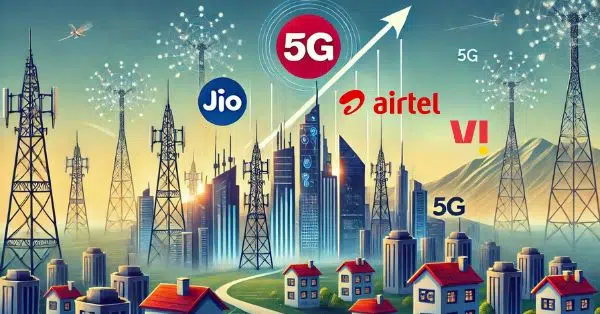
5G is the fifth generation of cellular technology and the current global standard, succeeding 4G LTE with faster speeds, lower latency, and the capacity to connect far more devices per cell. Standardized by 3GPP from around 2017 and launched commercially in 2019, it has become the dominant connectivity technology across most major markets. 5G spans low-, mid-, and high-band (mmWave) spectrum and two architectures — non-standalone, which runs on a 4G core, and standalone, which unlocks network slicing and the lowest latency. The standard continues to evolve through 5G-Advanced, adding AI-native management and tighter satellite integration. For enterprises and operators, the questions have shifted from coverage to monetization, private deployments, and standalone migration. This channel tracks 5G developments across vendors, operators, and enterprise verticals, with analysis and decision tools for teams evaluating real deployments.

Meta, Alphabet, and Microsoft signaled that AI infrastructure is now a multi-year capital priority measured in tens of billions per year. In their latest results, Meta guided capital expenditures into the $70–72 billion range with an even larger step-up expected the following year. Alphabet raised its 2025 capex outlook to $91–93 billion, up sharply from prior estimates. Microsoft reported $34.9 billion of capex in the most recent quarter, materially above expectations and up strongly year over year. These figures point to the largest synchronized build-out of compute, storage, and networking capacity in the history of cloud.
According to the latest Speedtest Intelligence findings from Ookla, the share of states where at least 60% of tested fixed-broadband users achieve the FCC’s 100 Mbps down/20 Mbps up benchmark rose sharply between late 2024 and the first half of 2025. That count climbed from 22 states (plus Washington, D.C.) to 38 states (plus D.C.), signaling faster last‑mile networks and better in-home performance for a sizable portion of U.S. households. Progress on equity also accelerated. In the first half of 2025, 33 states reduced the performance gap between urban and rural users—while 17 saw the gap widen versus the second half of 2024.
SoftBank and NVIDIA have validated a fully software-defined, GPU-accelerated AI-RAN that delivers 16-layer massive MU-MIMO outdoors—an inflection point for vRAN performance, Open RAN scalability, and AI-native RAN design. SoftBank’s AI-RAN product, AITRAS, executed the entire 5G physical layer on NVIDIA GPUs at the Distributed Unit and demonstrated stable 16-layer multi-user MIMO downlink in an outdoor trial at NVIDIA’s Santa Clara campus. The system connected to O-RAN-compliant radios via Split 7.2x and achieved roughly three times the spectral efficiency and throughput of a conventional 4-layer setup while maintaining per-user rates under high load. The field results show that software-only massive MIMO on GPUs can meet macro-radio conditions without bespoke silicon.
A renewed, three-year collaboration between Magic Leap and Google signals a pragmatic path to AI-capable AR glasses that prioritize visual quality, comfort, and manufacturability. Magic Leap is pivoting from building end-user headsets to becoming an ecosystem partner, offering waveguides, optics, device services, and manufacturing know-how to companies pursuing glasses form factors. The companies are aligning around Android XR, positioning the prototype showcased on stage at the Future Investment Initiative in Riyadh as a reference for future designs. The prototype highlights advances in see-through clarity, low-power displays, and an industrial design that approximates everyday eyewear.
India has ceded the lowest-tariff crown to Bangladesh and Egypt, yet it still leads on value through generous allowances and low data unit costs. Indian base plans commonly include unlimited voice, whereas Bangladesh and Egypt restrict voice to roughly 100 and 70 minutes respectively at entry level. On data, incremental purchase economics are unusually attractive: an extra Rs 100 typically buys around 26 GB, or about Rs 4 per GB, keeping India among the most affordable data markets globally. Even after adjusting for purchasing power parity, India remains at the affordable end of global tariff rankings.
The partnership targets two fronts: mission-critical rail communications for operations and high-speed broadband for passengers. The scope includes deploying advanced 5G infrastructure, testing FRMCS-based use cases, and running a real-world trial on an existing SAR line to validate performance, integration, and safety requirements. An innovation and test lab will be established to accelerate solution validation, and SAR teams will be trained on FRMCS/5G rail technologies to build in-house capability. The partners will explore 5G Standalone capabilities for operational communications, including quality-of-service guarantees, redundancy, and resilience needed for rail. FRMCS-aligned services such as mission-critical push-to-talk/data/video (MCX), Railway Emergency Call, and secure staff communications will be validated for integration with signaling and control systems.
SoftBank has reportedly approved the final $22.5 billion tranche of a planned $30 billion commitment to OpenAI, tied to the AI firm’s shift to a conventional for‑profit structure and a path to IPO. The investment completes a massive $41 billion financing round for OpenAI that began in April, making it one of the largest private capital raises in tech history. This funding and restructuring signal faster enterprise AI adoption, heavier infrastructure demand, and new platform dynamics that will ripple across networks, cloud, and edge. OpenAI is pushing deeper into enterprise tools, security features, and domain‑specific assistants.
Ericsson, Nokia, and Fraunhofer HHI jointly demonstrated a proof‑of‑concept codec that delivers meaningfully higher compression than today’s widely deployed standards—H.264/AVC, H.265/HEVC, and H.266/VVC—without a notable rise in complexity. The partners emphasize energy efficiency and scalability, which are critical for battery‑powered devices, edge compute, and large streaming workloads. Their submission was positively received by the ITU‑T Video Coding Experts Group and ISO/IEC MPEG, the bodies that jointly steward the H.26x/MPEG lineage. The work is positioned as an on‑ramp to the next standardization phase, targeting readiness to support commercial deployment around 2029–2030, in step with 6G timelines.
Verizon signed a commercial agreement with Eaton Fiber, an affiliate of Tillman Global Holdings, to extend fiber-to-the-premises service well beyond its current Fios footprint and the locations it expects to add through its planned Frontier deal. The structure is straightforward. Eaton Fiber will fund, build, and operate the local access network. Verizon will handle sales, marketing, and customer care and gain full residential retail exclusivity on the new builds during deployment and for a subsequent period. Fiber is the control point for converged services.
Vodafone is partnering with Irish firm Zinkworks on Rapid RIC, a central platform that blends secure data analytics, a visual low-code interface, and code-generating AI to create and operate RAN applications, or rApps. The goal is ambitious but specific: cut time-to-market from months to weeks, scale deployments across markets, and improve service quality, capacity, and energy use. The platform is slated for early 2026 availability and will run primarily on Vodafone’s private Google Cloud Platform environment. Rapid RIC uses GenAI to generate production-grade code from visual designs, enabling radio engineers to turn domain knowledge directly into software without deep AI or ML skills.
Germany’s migration from copper to fibre is entering a price-led phase, and Vodafone is sharpening fibre offers to pull DSL users across the line. Germany has the fibre footprint but not the take-up: many households still cling to DSL and VDSL even where FTTH is available, leaving operators running two networks and straining economics. The emphasis is on choice, transparency and avoiding dual-running costs—nudging, not forcing, customers to move. Price becomes the immediate lever to move hesitant households and SMEs off copper, especially in multi-dwelling units where permissions, in-building wiring and installation coordination add friction.
Nokia delivered a stronger-than-expected third quarter, with comparable operating profit reaching €435 million against consensus of about €342 million. Group net sales rose 12% to €4.83 billion, above forecasts, driven by Optical Networks and cloud-related demand tied to AI data centers. The stock jumped double digits intraday and added billions in market value, reflecting newfound confidence after a challenging first half. The recovery now is concentrated in network infrastructure rather than mobile RAN, underscoring where customers are actually spending to handle AI-era traffic patterns. Nokia nudged its full-year operating profit outlook to €1.7–2.2 billion, with a reporting change related to scaling down passive venture investments partly in play.

Frequently Asked Questions

What actually makes 5G different from 4G LTE?
5G introduces three core technical improvements over 4G LTE: significantly higher peak data speeds, in some cases multiple gigabits per second under ideal conditions compared to 4G’s typical tens to low hundreds of megabits per second; substantially lower latency, the delay between sending and receiving data, which matters for applications like gaming, video calls, and industrial automation where responsiveness is critical; and far greater device density support, allowing a single cell site to maintain reliable connections with a much larger number of simultaneous devices, which matters increasingly as IoT sensors and connected devices proliferate. These improvements come from a combination of new radio technology, additional spectrum bands made available for 5G use, and a redesigned network architecture that’s considerably more flexible and software-driven than 4G’s architecture was.
What’s the difference between low-band, mid-band, and high-band (mmWave) 5G?
Low-band 5G uses similar frequencies to 4G LTE, offering wide coverage area and good building penetration but speeds not dramatically faster than good 4G performance, making it most useful for extending broad geographic coverage rather than delivering 5G’s headline speed improvements. Mid-band 5G offers a more balanced tradeoff between coverage and speed, generally delivering meaningfully faster performance than 4G across a reasonably wide area, and has become the most common band used for mainstream 5G deployment in most markets globally. High-band 5G, often called mmWave, delivers by far the fastest possible speeds, but its very short range and poor ability to penetrate walls means it’s typically deployed only in dense, high-traffic urban areas like stadiums, rather than for broad area coverage.
What’s the difference between 5G NSA (non-standalone) and 5G SA (standalone)?
5G non-standalone, or NSA, runs 5G radio technology on top of an existing 4G core network, meaning certain control functions still rely on 4G infrastructure even though the actual data connection itself uses 5G radio technology; this was the faster, easier path many operators took for their initial 5G launches, since it could be deployed by upgrading existing 4G infrastructure rather than building an entirely new core network from scratch. 5G standalone, or SA, uses an entirely new, independently functioning 5G core network rather than relying on 4G at all, unlocking more of 5G’s distinctive advanced capabilities, including network slicing and the lowest possible latency, that NSA architecture generally can’t fully support. Many operators have been gradually transitioning from NSA to SA, though this migration has generally taken longer than initially anticipated.
How widespread is 5G coverage and adoption globally in 2026?
5G has become genuinely widespread rather than experimental. Global subscriptions surpassed 3.1 billion in early 2026, with another 162 million subscriptions added in just the first quarter of the year, reflecting continued strong growth even years after 5G’s initial 2019 commercial launch. Coverage varies considerably by region and band: low and mid-band 5G now reaches the substantial majority of the population in most major markets including the U.S., much of Europe, China, and South Korea, while high-band mmWave coverage remains considerably more limited and concentrated in dense urban areas given its short range. Adoption has progressed furthest in markets with aggressive early infrastructure investment, particularly China and South Korea, while other regions, especially parts of the developing world, continue working through earlier stages of 5G buildout.
What is ‘5G-Advanced,’ and how is it different from regular 5G?
5G-Advanced, sometimes marketed by certain vendors and operators, particularly in China, as 5.5G, refers to the next phase of 5G standards development beyond the original 2019 specification, formalized starting with 3GPP Release 18 and continuing through subsequent releases. It introduces capabilities including better support for reduced-capability IoT devices that don’t need full 5G performance, tighter integration with non-terrestrial satellite networks, more sophisticated AI-native network management built directly into the standard, and further uplink and capacity improvements beyond the original 5G specification. Rather than representing a completely new generation the way 5G itself was relative to 4G, 5G-Advanced is best understood as a substantial, ongoing evolution and refinement of the existing 5G standard, extending its useful commercial life well beyond what the original 2019 specification alone delivered.
Why do real-world 5G speeds vary so much between users and locations?
Real-world 5G speeds vary considerably because of the fundamental tradeoffs between different frequency bands: a user connected to low-band 5G in a rural area will experience meaningfully slower speeds than someone connected to mid-band 5G in a well-covered urban area, who in turn will experience slower speeds than someone briefly connected to high-band mmWave near a stadium or dense downtown location. Network congestion also plays a significant role, since a cell site serving many simultaneous users, particularly during peak usage periods, will generally deliver lower per-user speeds than the same site serving fewer users. Device capability matters too, since a phone’s specific modem chip determines which frequency bands and 5G features it can actually access, meaning even within the same coverage area, different devices can experience meaningfully different real-world performance.
Is 5G actually necessary, or is 4G still ‘good enough’ for most uses?
For many everyday tasks like browsing, messaging, and standard video streaming, 4G genuinely remains adequate, and many consumers report not noticing a dramatic difference in daily use compared to a well-performing 4G connection, which is part of why 5G monetization has proven harder than the industry initially expected. However, 5G’s advantages become considerably more apparent for specific use cases: dense urban areas with heavy simultaneous network usage benefit meaningfully from 5G’s greater capacity, fixed wireless access using 5G can deliver genuinely faster home broadband than many alternatives, and emerging applications like cloud gaming, AR and VR, and industrial automation benefit directly from 5G’s lower latency and higher reliability in ways 4G generally can’t match. Whether 5G feels necessary depends heavily on a specific user’s actual usage patterns and location rather than being a universal yes or no answer.
How does 5G relate to other technologies like network slicing, private networks, and FWA covered elsewhere in this reference?
5G is the foundational technology underlying many of the more specific capabilities covered elsewhere in this reference. Network slicing depends specifically on 5G standalone’s more flexible core network architecture to create multiple differentiated virtual networks on shared infrastructure. Private networks increasingly use 5G rather than 4G LTE as their core technology for new deployments, given 5G’s superior capacity and lower latency for industrial use cases. Fixed wireless access has become one of 5G’s clearest commercial monetization successes, using 5G’s speed and capacity to deliver home broadband as an alternative to cable or fiber. Open RAN’s disaggregated, multi-vendor approach to radio equipment is increasingly being applied specifically to 5G network deployments, making 5G the underlying connectivity layer most other categories in this reference build upon.


Partner Hubs

Telco AI Agent Leadership

Telco AI Agent Leadership Landscape - Network Equipment Vendors
Network Equipment Vendor Report
How are Amdocs, Salesforce, Comarch, Totogi, Qvantel, Oracle and other OSS/BSS vendors deploying telecom AI agents?
OSS/BSS Vendor Report
How are Amdocs, Salesforce, Comarch, Totogi, Qvantel, Oracle and other OSS/BSS vendors deploying telecom AI agents?
System Integrator Report
Scroll to Top