Industry Intelligence
Intelligence Journeys
AI Use Cases for Utilities
Private Broadband for Utilities
Intelligence Tools
By Tool Type
▼
By Industry
▼
Access Type
▼
Tool Source
▼
Intelligence PlatformPaid
▼
Monthly Tracker
▼
Resources
▼
Technology Hubs
▼
Partner Hubs
▼

Edge/MEC
Edge computing and multi-access edge computing (MEC) place processing close to where data is generated — at the network edge rather than in distant centralized clouds — to cut latency and reduce backhaul. For applications that demand fast, local responses, such as industrial automation, computer vision, AR, and autonomous systems, the edge is often what makes them viable. Edge is tightly linked to 5G standalone, private networks, and AI inference, and is a key area where operators, hyperscalers, and enterprises both compete and partner. For decision-makers, the questions are where edge genuinely beats centralized cloud and how to balance on-premises, network-edge, and public-cloud processing. This channel covers edge and MEC across operator, hyperscaler, and enterprise deployments — architectures, partnerships, and use cases — with analysis of where moving compute to the edge actually pays off.
- Usecase
- August 4, 2025
- Hema Kadia

India’s first Private 5G Captive Non-Public Network (CNPN) is now operational at Numaligarh Refinery in Assam, thanks to BSNL and NRL. This private 5G network supports real-time IoT, AI-driven analytics, and AR/VR-based workforce training, setting a new benchmark in refinery automation and cybersecurity. A major step for Digital Assam and the Atmanirbhar Bharat mission.
- Usecase
- August 4, 2025
- Hema Kadia

Ooredoo Maldives has launched the nation's first private 5G island at Waldorf Astoria Maldives Ithaafushi by deploying a dedicated submarine cable. This infrastructure milestone provides high-speed, low-latency connectivity, enabling AI-powered guest services, immersive AR/VR experiences, and seamless digital hospitality. It sets a benchmark for smart tourism in the Maldives and redefines digital luxury for remote island resorts.
- Tech News & Insight
- July 28, 2025
- Hema Kadia

Intel is spinning off its Network and Edge (NEX) division after posting a $2.9B loss, cutting 15% of its workforce, and pivoting to an AI-first strategy. The standalone NEX business will focus on networking and edge innovation, with Intel retaining an anchor investor role. The move underscores Intel’s restructuring to prioritize x86 and AI while seeking agility to compete with NVIDIA, AMD, and Broadcom in high-performance networking and 5G infrastructure.
- Tech News & Insight
- July 24, 2025
- Hema Kadia

Nokia is shifting its core focus from mobile networks to AI infrastructure and optical networking amid declining RAN revenues and financial pressures. In Q2 2025, the Network Infrastructure division surpassed Mobile Networks, driven by demand from data centers and hyperscalers. With CEO Justin Hotard emphasizing AI integration and enterprise 5G, Nokia is repositioning itself for long-term growth while maintaining its mobile presence as a strategic layer.
- Tech News & Insight
- July 21, 2025
- Hema Kadia

Qualcomm teams up with Lenskart to introduce AI-driven smart glasses to India, leveraging Snapdragon XR platforms for immersive AR, VR, and MR experiences. With over 100 devices already powered by Snapdragon XR and a strong push for localized innovation, Qualcomm is betting big on spatial computing as the next phase of everyday tech.
- Tech News & Insight
- July 21, 2025
- Hema Kadia
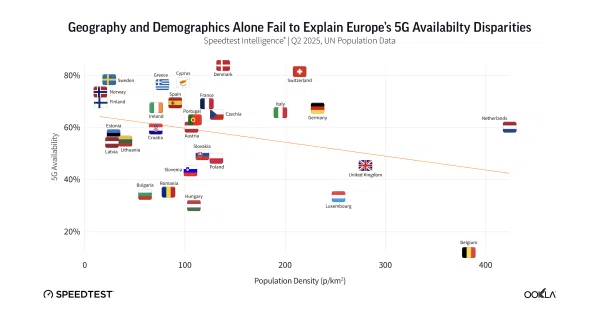
Europe’s 5G progress is accelerating but unevenly. Denmark, Sweden, and Spain lead with strong 5G availability and SA deployment, driven by early spectrum allocation and targeted policy. Meanwhile, the UK, Belgium, and Hungary trail due to regulatory delays, infrastructure bottlenecks, and weak investment. With the Digital Decade 2030 goal in sight, aligning on policy, spectrum, and subsidies will be key to closing the EU’s internal 5G divide.
- Usecase
- July 16, 2025
- Hema Kadia

At the Emirates Great Britain Sail Grand Prix in Portsmouth, Ericsson and BT combined private 5G and public 5G Standalone (SA) to enable real-time boat telemetry, low-latency video for broadcast, and immersive AR/VR fan experiences. The hybrid network, featuring Ericsson Private 5G and BT’s 5G SA slicing, created a fully connected race ecosystem spanning multiple sites and the F50 fleet.
- Usecase
- July 15, 2025
- Hema Kadia

The Istanbul Expo Center (IFM) has become Türkiye’s first venue to deploy an indoor 5G Private Network, turning its 96,000 m² exhibition space into a next-gen smart venue for digital trade fairs. The Opticoms and ADSYS project integrates IoT, edge computing, and network slicing to support real-time testing, secure enterprise connectivity, and immersive AR/VR showcases.
- Tech News & Insight
- July 15, 2025
- Hema Kadia

5G-Advanced is redefining mobile networks through AI-native intelligence, sustainability, and advanced capabilities like XR support, NTN integration, and low-latency industrial IoT. Built on 3GPP Releases 18–20, it enables predictive automation, 30% energy savings, and sets the stage for 6G.
- Usecase
- July 15, 2025
- Hema Kadia
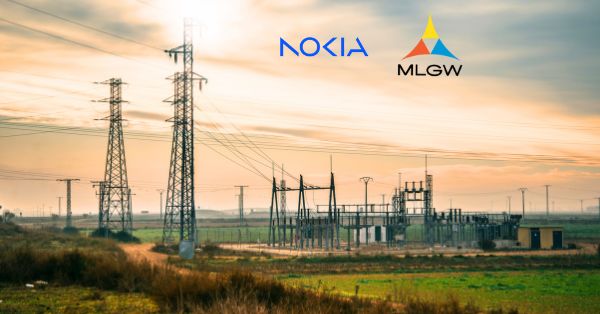
Memphis Light, Gas and Water (MLGW) and Nokia have launched the first standalone private 5G network by a U.S. municipal utility. This $31 million investment will modernize infrastructure across Memphis and Shelby County, enhancing real-time monitoring, outage response, cybersecurity, and smart grid capabilities for over 420,000 customers.
- Usecase
- July 11, 2025
- Hema Kadia

At the 2025 MLB All-Star Week, T-Mobile deployed a 5G Private Network to power Automated Ball-Strike (ABS) technology, immersive fan experiences, and smart event operations. Covering Truist Park and The Battery Atlanta, the network delivered ultra-low latency, network slicing for first responders, and high-speed 5G upgrades, creating a blueprint for future smart stadiums and live sports innovation.
Frequently Asked Questions
What’s the difference between ‘the cloud’ and ‘the edge’ in telecom?
Cloud computing typically runs in a relatively small number of large, centralized data centers, often located far from any individual user, which is efficient for many workloads but introduces unavoidable physical distance, and therefore latency, between where data is generated and where it’s processed. Edge computing, specifically MEC, places computing resources much closer to where data actually originates, at cell towers, base stations, or local facilities, cutting the round-trip delay for applications where that distance meaningfully matters. The tradeoff is that edge sites generally have far less raw computing capacity than a massive centralized data center, so edge deployments tend to handle specific, latency-sensitive workloads locally while still relying on the broader cloud for less time-critical processing and coordination.
Is MEC mainly a telecom-specific concept, or does it apply more broadly?
It started as a mobile-network-specific concept, originally called Mobile Edge Computing when ETSI introduced it in the mid-2010s, focused on placing computing resources within mobile radio access network infrastructure. ETSI broadened the concept to Multi-access Edge Computing in 2017 specifically to extend it beyond cellular networks to also cover fixed-line broadband and Wi-Fi access, recognizing that the underlying need, computing resources close to the point of data generation, applies regardless of access technology. Current standards work is extending the concept further still, with ETSI’s MEC group releasing Phase 4 specifications in late 2025 focused on developer-friendly APIs for vertical industries and explicit alignment with emerging 6G requirements.
What applications actually benefit from edge computing?
The clearest use cases are ones where milliseconds genuinely matter, or where large amounts of locally generated data would otherwise need to travel back to a distant data center unnecessarily. Autonomous vehicles need to process sensor data and make navigation decisions in near real time, where even modest added latency could be meaningful for safety. Industrial automation and predictive maintenance benefit from edge processing of sensor data from factory equipment. AR and VR applications need responsive, low-latency rendering support. Smart city video analytics, like traffic monitoring, generates enormous volumes of video data far more efficient to process locally. Increasingly, running AI inference closer to users for real-time applications is becoming one of the most significant edge use cases of all.
Why are telecom operators excited about edge computing as a revenue source?
Beyond reducing backhaul costs, edge sites give telecom operators something cloud hyperscalers don’t have by default: physical proximity and direct integration with the radio network across thousands of locations nationwide. This positions operators uniquely to offer latency-sensitive computing services that a centralized cloud data center simply can’t match on responsiveness, regardless of raw computing power. Operators are increasingly positioning these edge locations specifically as AI inference points, sometimes described as compact ‘AI factories,’ capable of running real-time AI workloads close to users. This opens a genuinely new monetization path beyond selling connectivity itself, letting operators compete in the broader computing and AI infrastructure market using distributed physical infrastructure cloud-only providers would need years to replicate.
How mature is MEC deployment in 2026?
By 2026, MEC has moved well past the concept or early-pilot stage into active, expanding commercial deployment. ETSI’s MEC group has produced more than 50 technical specifications covering reference architectures, service enablers, and deployment guidelines, and released its Phase 4 work in late 2025, focused on developer-friendly APIs and explicit alignment with open-source projects and 6G preparation. Telecom operators worldwide are actively pairing MEC deployments with private 5G networks, AI workloads, and Open RAN integration in live commercial deployments rather than isolated trials. The technology continues to mature rather than being fully settled; convergence between MEC and Open RAN architectures remains an active area of development.
How does edge computing relate to private 5G networks?
Edge computing and private 5G networks are frequently deployed together because they solve complementary problems for the same enterprise use cases. A private 5G network provides dedicated, reliable, high-performance wireless connectivity across a facility like a factory or port, while edge computing provides the local processing power needed to actually act on the data that connectivity carries, without sending everything back to a distant cloud data center. A manufacturing facility, for example, might use private 5G to connect cameras and sensors across the factory floor, with an edge deployment at that same facility processing video analytics or controlling automated machinery in near real time. This pairing is one of the most common patterns in enterprise digital transformation projects today.
What’s the difference between edge computing and Open RAN’s ‘Cloud RAN’ concept?
Edge computing and Cloud RAN address related but distinct parts of the network. Cloud RAN refers specifically to running radio access network functions, the software controlling how a cell site transmits and receives wireless signals, on cloud-based, software-defined infrastructure rather than dedicated radio hardware. Edge computing, particularly MEC, refers more broadly to running general-purpose application workloads, not just radio network functions, close to the network edge, things like video analytics, AI inference, or industrial automation software. In practice, the two concepts increasingly converge physically, since the same edge infrastructure supporting Cloud RAN’s virtualized radio functions can often also host MEC application workloads on shared hardware.
What are the biggest technical challenges in deploying edge computing at scale?
Deploying edge computing at scale introduces several persistent technical challenges. Managing and orchestrating computing resources across potentially thousands of geographically distributed edge sites is meaningfully more complex than managing a small number of centralized data centers, since each edge location has limited physical space, power, and cooling capacity. Ensuring consistent security across so many distributed locations, each a potential point of vulnerability, requires more extensive security architecture than securing a handful of centralized facilities. There’s also a workload placement challenge: deciding which tasks genuinely benefit from edge processing versus which are better handled centrally, since over-provisioning edge capacity for workloads that don’t truly require it can be an inefficient use of limited, expensive infrastructure.