VR

Virtual reality immerses users in fully digital environments through headsets, with applications spanning entertainment, training, design, collaboration, and industrial simulation. For telecom, VR’s significance lies in its demanding connectivity requirements — high bandwidth and low latency, especially for cloud-rendered and streamed experiences — making it a recurring test case for 5G, edge computing, and future networks. Enterprise and industrial uses, including training and remote collaboration, often matter more than consumer applications and overlap with digital twins and the industrial metaverse. After early hype, focus has shifted toward use cases with clear value and realistic network needs. This channel covers virtual reality where it meets networks: the connectivity and edge foundations immersive experiences depend on, and the enterprise and industrial deployments most likely to scale, with a grounded view of what the technology requires and delivers.

In this 180th episode of The G2 on 5G, we cover:
1. Telus partners with Samsung Networks for LTE and 5G open and virtualized RAN
2. Verizon inks Private 5G deal with NHL
3. T-Mobile leans into uplink transmit switching for 5G uplink optimization
4. AT&T and FirstNet sign 10-year, $8 billion deal including 1,000 new sites, SA 5G
5. Nokia and Dell team up for private cellular networking
6. Vodafone HyperRealityHub
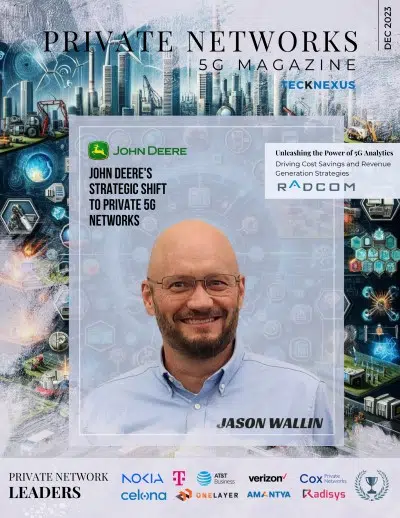
Explore the Private Network Edition of 5G Magazine, your guide to the latest in private 5G/LTE and CBRS networks. This edition spotlights 11 award categories including private 5G/LTE leader, neutral host leader, and rising startups. It features insights from industry leaders like Jason Wallin of John Deere and an analysis of RADCOM's 5G analytics. Covering sectors from manufacturing to healthcare and sustainability, it's a comprehensive read for those interested in the evolving landscape of private networks.
Explore how Verizon's 5G solutions are enhancing sports and event venues, offering unprecedented connectivity and fan experiences.
Explore how AT&T is transforming healthcare with 5G technology, enhancing patient care and medical research.
Explore how Deutsche Telekom shapes transportation with 5G - from teleoperated shuttles to automated driving and connected vehicle tech.
This article delves into the recent Ericsson Mobility Report, highlighting the robust growth of 5G technology with predictions of over 5.3 billion subscriptions by 2029 and a significant increase in average data usage per smartphone.
Welcome to our latest edition - a deep dive into the technological marvels of Open RAN and 5G. Join us as we unravel insider insights from Radisys Corporation's CEO, explore the transformative CAMARA project, and highlight pioneering entities like the Telecom Infra Project, Small Cell Forum, and Open RAN Policy Coalition. Delve into the future of consumer engagement in the Spatial Web era and discover the intersection of AI, AR, VR, and edge computing. We invite you to explore, question, engage and help shape our shared digital future. Welcome to the discourse. Happy reading!
Meta Platforms is in negotiations with Magic Leap for a possible long-term collaboration. While this partnership could aid Meta's metaverse goals, Magic Leap's waveguide technology, despite its flaws, is regarded as valuable. This comes as Meta continues investing in the metaverse despite investor dissatisfaction, and as it strives to reduce reliance on Chinese manufacturing.
This edition is dedicated to "Shaping the Future with Connectivity and Tech," a theme that truly encapsulates the transformative power of technology in our lives. In this edition, we delve into the multifaceted world of 5G, AI, AR/VR, IoT, and other emerging technologies rapidly revolutionizing various aspects of our society, from our workplaces to our shopping experiences to industrial sectors.
The article explores the transformative impacts of 5G networks and augmented reality (AR) / virtual reality (VR) on consumer interactions, shopping habits, and entertainment preferences. These technologies enhance the user experience with real-time, immersive applications, consequently reshaping purchasing decisions and engagement with brands. Industries like retail and entertainment have embraced this shift, offering immersive and interactive experiences like virtual try-ons and immersive gaming. Moreover, sectors such as healthcare and education have harnessed these technologies to increase accessibility and improve service delivery. However, the article also highlights challenges such as privacy, security, and the potential digital divide. It emphasizes the importance of inclusive technologies and services, as well as the ethical use of these technologies, advocating for industry standards and best practices to ensure equitable benefits and minimize negative impacts.
The article explores how 5G, AI, and AR/VR are transforming a range of vertical industries, including manufacturing, transportation, energy and utilities, healthcare, education, retail, mining, agriculture/agritech, and smart cities. It highlights the benefits of these technologies, including increased efficiency and productivity, improved customer satisfaction, and new opportunities for growth. The article also discusses the challenges associated with these technologies, including privacy and security concerns and accessibility issues. The article concludes by emphasizing the importance of inclusive technologies and services, and the responsible and ethical use of these technologies, in order to ensure that the benefits of 5G, AI, and AR/VR are accessible to all and used for the betterment of society.
The digital twin revolution is changing how businesses optimize their operations by using virtual models to simulate, predict, and enhance real-world processes. Digital twins provide numerous benefits, such as enhanced performance and efficiency, predictive maintenance, improved decision-making, reduced time-to-market, and better collaboration. With use cases across industries like manufacturing, energy and utilities, transportation and logistics, healthcare, and smart cities, digital twin technology is becoming increasingly important for businesses. However, organizations must address challenges related to data quality, integration, security, cost, and expertise to implement and benefit from digital twin technology successfully.

Frequently Asked Questions

What’s the difference between VR and AR?
VR, Virtual Reality, creates a fully immersive digital environment experienced through a headset that completely replaces a user’s view of the physical world, meaning the user sees only the virtual environment rather than their actual physical surroundings. AR, Augmented Reality, instead overlays digital content onto a view of the actual physical environment, meaning the user still sees and interacts with their real surroundings, with digital elements added on top of that real-world view rather than replacing it entirely. This distinction matters technically and in terms of use cases: VR tends to suit fully immersive experiences like gaming or training simulations, while AR tends to suit use cases where maintaining awareness of real surroundings while adding helpful digital information remains important.
Why does VR require such demanding network performance compared to typical video streaming?
Genuinely immersive, high-quality VR requires extremely low latency, since any noticeable delay between a user’s head movement and the corresponding visual update in the headset can cause motion sickness and break the sense of immersion in a way that’s far more disruptive than a similar delay would be in typical video streaming, where the viewer isn’t actively controlling their viewing perspective in real time. VR also requires considerably higher and more consistent bandwidth than typical video streaming to deliver high-resolution visuals across a wide field of view without visible compression artifacts or lag, since a VR headset typically needs to render and display a much larger total visual area than a standard video stream displayed on a flat screen.
Has consumer VR adoption lived up to early expectations?
Not entirely. Early projections from the mid-2010s and again in the early 2020s frequently anticipated faster, more widespread mainstream consumer VR adoption than has actually materialized, with VR headset sales and active usage generally remaining a more niche category than some of those early forecasts suggested. Several factors have contributed to this slower-than-expected adoption, including the physical bulkiness and comfort limitations of VR headsets compared to more familiar devices like smartphones, a relatively limited library of genuinely compelling consumer content, and the practical challenge of needing dedicated, distraction-free physical space to use VR comfortably and safely, which doesn’t fit naturally into many people’s everyday routines the way smartphone usage does.
What enterprise or industrial VR use cases have found genuine practical traction?
Enterprise applications have generally found steadier, more practical traction than consumer VR. Immersive training simulations have proven particularly valuable in industries like manufacturing, healthcare, and aviation, where VR lets organizations train employees on complex or potentially dangerous procedures in a fully realistic but completely safe simulated environment, without the cost or risk of training on actual physical equipment or real patients. Virtual collaboration and design visualization tools have also found genuine adoption among architecture, engineering, and product design teams, letting distributed teams collaboratively review detailed 3D models and virtual spaces together in real time, regardless of their actual physical location, generally with clearer, more measurable business value than many consumer entertainment applications.
How does edge computing specifically help reduce VR’s demanding latency requirements?
Edge computing reduces VR’s latency challenge by handling computationally intensive rendering and processing tasks at locations physically closer to the user, rather than requiring that processing to happen in a distant, centralized cloud data center that could introduce a longer round-trip delay. For VR specifically, where even small amounts of added latency can cause noticeable, disorienting lag between a user’s movement and the corresponding visual update, processing content at a nearby edge location rather than a faraway central data center can meaningfully improve the overall experience, particularly for more demanding VR applications like cloud-rendered VR, where much of the actual visual rendering work happens on network infrastructure rather than on the headset device itself.
What role is 5G expected to play in VR’s future development?
5G is expected to support more capable, lightweight VR headsets specifically by enabling more processing-intensive tasks, like rendering complex visuals, to happen on network infrastructure rather than entirely on the headset device itself, potentially allowing headsets to become smaller, lighter, and more affordable since they wouldn’t need to contain all the processing power necessary to render a fully immersive VR experience independently. 5G’s combination of higher bandwidth and lower latency compared to earlier wireless network generations also supports untethering VR headsets from a wired connection to a separate, more powerful computer, which has historically been necessary for the most graphically demanding VR experiences.
Why does VR sometimes cause motion sickness, and how does network performance relate to that?
VR motion sickness, sometimes called cybersickness, generally occurs when there’s a mismatch between what a user’s eyes perceive in the virtual environment and what their inner ear’s balance system actually senses about their real physical movement, a sensory conflict that can trigger nausea similar to traditional motion sickness. Network performance relates directly to this issue because any added latency between a user’s actual head movement and the corresponding visual update effectively worsens this sensory mismatch, since the visual experience lags noticeably behind the user’s actual physical movement. This is precisely why extremely low latency is considered such a critical, non-negotiable requirement for delivering a genuinely comfortable, immersive VR experience over a network connection.
How does cloud-rendered VR differ from VR running entirely on a standalone headset?
Standalone VR headsets perform all the necessary processing and rendering directly on the device itself, using onboard computing hardware, meaning the headset doesn’t depend on a network connection to actually generate and display the virtual environment, though it may still use connectivity for other purposes like downloading content or multiplayer features. Cloud-rendered VR instead offloads much of the demanding visual rendering work to remote servers, potentially including edge computing locations closer to the user, with the rendered visuals then streamed to the headset over a network connection in real time. This cloud-based approach can enable more visually sophisticated VR experiences than a standalone headset’s onboard hardware alone could practically support, but depends heavily on having a sufficiently fast, low-latency, and reliable network connection.

Sponsored by Palo Alto Networks
⚡ Utilities ⏱ 8 min ✓ Free
This tool is built and hosted by TeckNexus.
Launch Tool →
Whitepaper
Neutral host, network slicing, and autonomous ground vehicles look like three unrelated topics — but they share the same hidden security risk. See what 100 airport deployments reveal about securing the components with the broadest reach across the network....
Palo Alto Networks
Whitepaper
Airports are deploying AI surveillance, biometrics, and autonomous vehicles faster than most networks can secure them. See what 100 real-world airport deployments reveal about the airside/landside security gap — and the 4-layer framework built to close it....
Palo Alto Networks
Scroll to Top