
Why Vodafone’s power resilience matters for emergency connectivity
Vodafone is accelerating a multi-year resilience programme to keep emergency and critical services online during grid failures, an issue that is moving from rare-event planning to board-level risk management.
Blackout-triggered rollout and programme scale
A widespread blackout across Portugal with spillover in Spain and France in 2025 exposed how quickly connectivity degrades when power vanishes. In response, Vodafone fast-tracked its Enhanced Power initiative to harden more than 10,000 critical mobile access sites across Europe over the next two years, starting in Portugal. The plan spans Europe’s RAN and transport layers and extends to Africa through Vodacom.

Climate risks, grid instability, and EU resilience regulation
Extreme weather and grid instability are now a recurring operational reality. For operators, the financial and reputational risks of emergency service outages outweigh incremental OPEX. The initiative also aligns with Europe’s tightening rules for essential infrastructure, including requirements under frameworks such as NIS2 and the Critical Entities Resilience directive, which are pushing operators toward demonstrable continuity plans and auditable backup capabilities.
How Vodafone builds layered power resilience across networks
The approach blends physical backup power, intelligent load management, and targeted site prioritization to extend uptime during outages of different sizes.
Local outages: COWs and rapid field response
For small, localized failures (roughly up to ten sites), Vodafone will continue to deploy Cells on Wheels to restore coverage quickly. This is complemented by its Instant Network Emergency Response capability, which brings portable Wi‑Fi and device charging to affected populations and first responders during disaster relief operations.
Regional blackouts: AI-powered Adaptive Power Backup
When tens to hundreds of sites are impacted, Vodafone’s Adaptive Power Backup kicks in. The system uses AI to predict outages, throttle non-essential loads, and place selected radio elements into low-energy modes, preserving channels for emergency calls, SMS, and priority users. Early deployments in Greece and trials in Turkey show the approach can nearly double battery runtime in some scenarios.
National events: 72-hour core and 4-hour critical access backup
Vodafone is reinforcing three layers of the network for worst-case scenarios. More than 400 core and backbone facilities in the EU are provisioned with batteries and diesel generators for at least 72 hours of backup or guaranteed refueling within 48 hours. Aggregation sites, which funnel traffic from clusters of cells, are being provisioned for a minimum of four hours based on peak load assumptions. Over 10,000 critical access sites serving emergency services, hospitals, government offices, airports, and major transport hubs will also receive at least four hours of battery backup as phase one, with newer battery technologies to follow.
Satellite augmentation toward 3GPP NTN
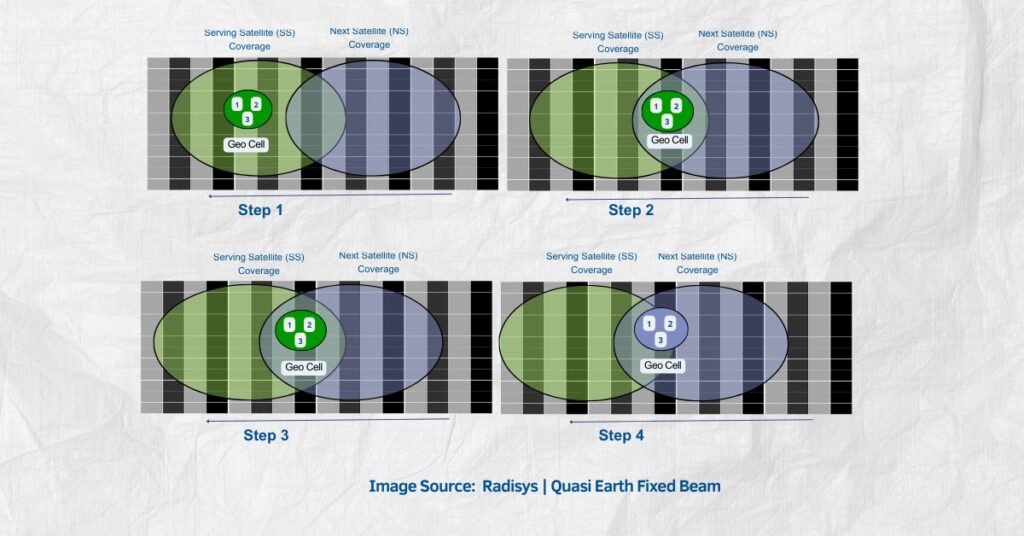
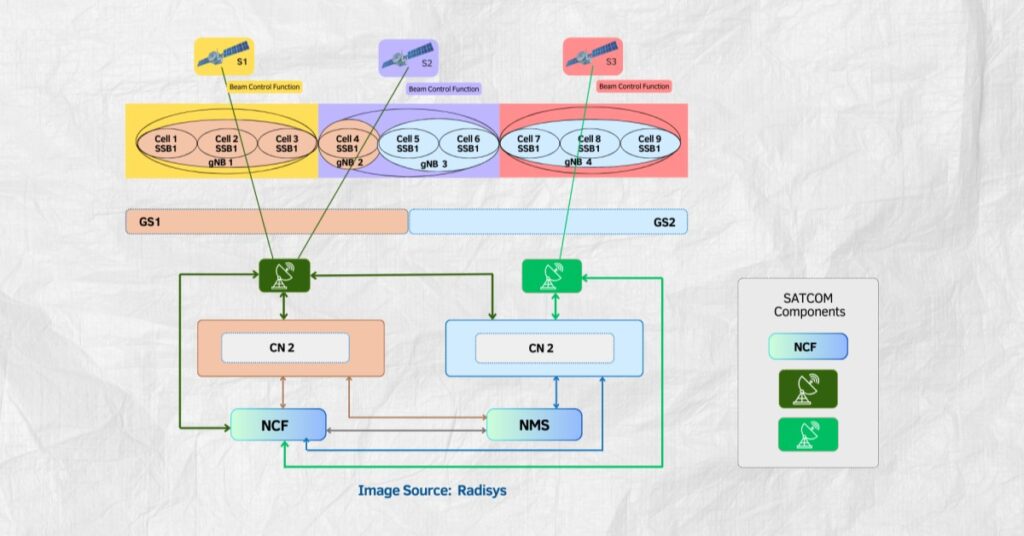
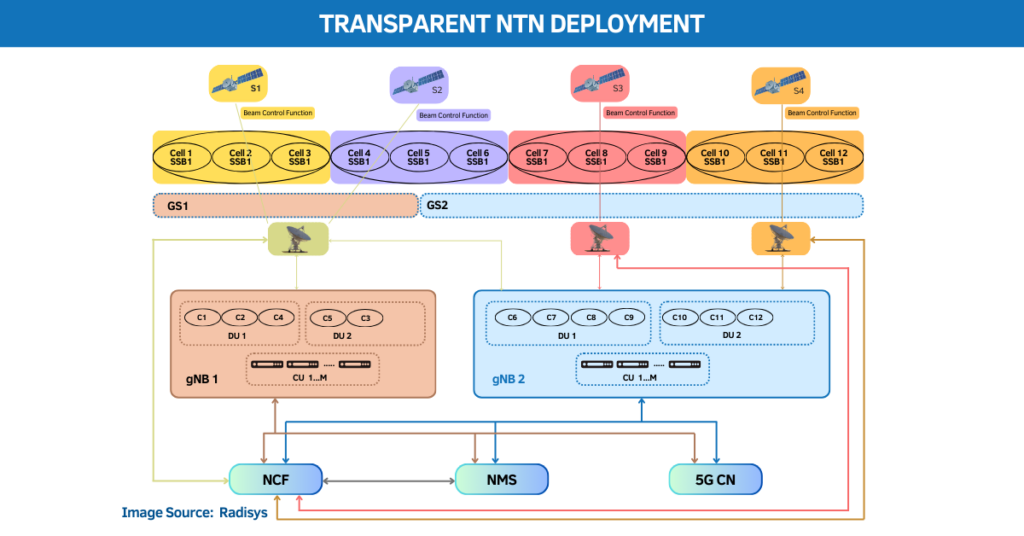
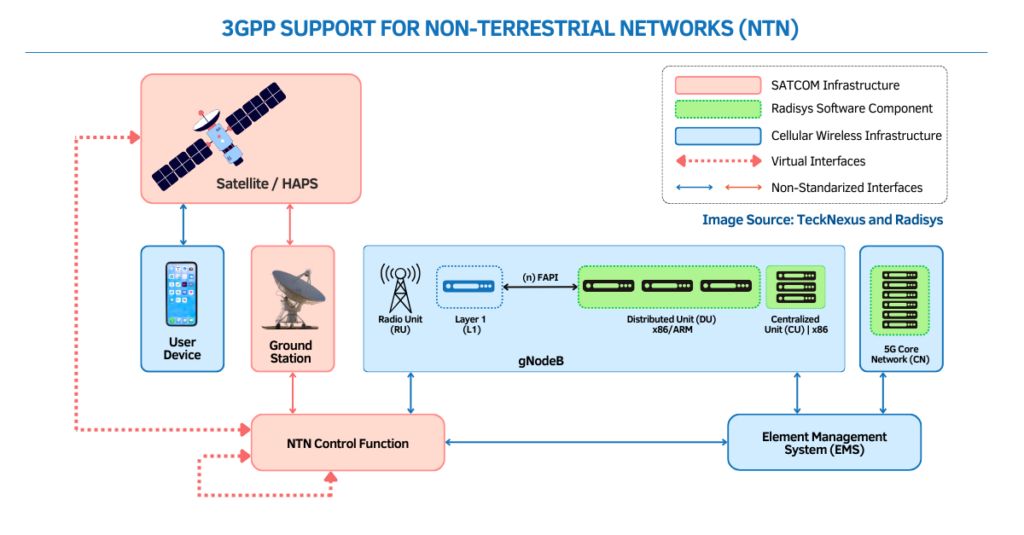
To add another layer of redundancy, Vodafone is exploring satellite connectivity to link standard smartphones and responders’ devices in hard-to-reach or disaster zones. This aligns with the direction of 3GPP non-terrestrial network specifications, which can help keep basic services available when terrestrial links fail.
AI strategy to extend uptime without runaway capex
AI is being used to extend runtimes, prioritize critical traffic, and reduce the need for blanket battery overbuilds.
Predictive control to conserve power and prioritize traffic
The software monitors site conditions, forecasted grid risks, and load profiles to make remote decisions in real time. It dynamically sheds or sleeps non-essential functions while preserving essential voice, SMS, and emergency channels. Vodafone reports that this keeps emergency services connected up to three times longer than typical industry practice during extended outages.
Capex deferral and TCO gains from AI-led power orchestration
Regulators are weighing backup mandates, but the cost of equipping every site with four-hour batteries is steep. A recent Ofcom analysis estimated a one-time investment in the UK alone in the multi-billion-pound range if applied across all operators. Vodafone’s AI-first approach lengthens uptime at priority locations, lowers diesel run hours, and reduces truck rolls—freeing capital for RAN modernization, fiber, edge compute, and 5G SA upgrades.
Vodacom’s load-shedding strategy for Africa’s grids
Frequent grid load-shedding in parts of Africa makes power resilience a day-to-day operational challenge rather than a contingency.
Edge AI for energy orchestration and diesel reduction
Vodacom is combining renewable energy with AI to optimize generator load factors and choose the most economical and available power source at each moment, without sacrificing uptime. Early results indicate a 10%–15% reduction in diesel use, lower operating costs, fewer site visits, and a better customer experience under volatile grid conditions.
Ecosystem impacts: power markets, partnerships, and policy
Resilience is no longer a single-operator problem; it requires cross-industry coordination with energy providers, policymakers, and peers.
Virtual power plants (VPP) and flexibility market participation
Vodafone is exploring partnerships with energy aggregators to pool backup assets as virtual power plants. The idea is to monetize idle capacity through grid services, offsetting resilience costs and lowering emissions. Flexibility markets are more mature in Germany, Ireland, and the UK, but broader adoption in other EU countries will likely require incentives and regulatory streamlining.
Co-funding models and compliance alignment (NIS2, CER)
Operators cannot bear the full cost of hardening critical sites while also investing in 5G, FTTH, and cloud-native core transitions. Co-funding models aligned to EU and national frameworks can speed deployment, deliver measurable outcomes, and improve auditability for essential service continuity.
Next steps for operators, enterprises, and public agencies
Now is the time to convert resilience strategy into measurable plans, contracts, and technology pilots.
Recommendations for operators
Prioritize a tiered site list for four-hour and 72-hour backup aligned to emergency service coverage maps. Deploy AI-backed power orchestration where batteries are constrained, and standardize “cell sleep” policies across multi-vendor RAN. Negotiate refueling SLAs and test logistics for 48–72 hours at scale. Pilot VPP participation in markets where rules allow and build the business case for broader expansion.
Guidance for enterprises and public safety agencies
Update SLAs to specify minimum connectivity lifetimes during power events and require reporting on battery health and generator readiness. Test fallback plans for voice and messaging, including satellite-enabled options, and verify device compatibility as 3GPP NTN matures. Coordinate with operators on priority access policies and pre-plan coverage for command centers, hospitals, and airports.
Policy actions for regulators and governments
Anchor resilience rules to critical sites first, not blanket mandates, and enable cost recovery via targeted funding. Accelerate flexibility market reforms so telecom power assets can participate as grid resources. Align reporting frameworks with NIS2 and CER to reduce compliance friction and improve transparency.
Vodafone’s programme shows how AI, targeted backup power, and ecosystem collaboration can materially extend network lifetimes during blackouts—keeping essential services connected when it matters most.