Cobham–Gatehouse merger accelerates standardized 5G NTN
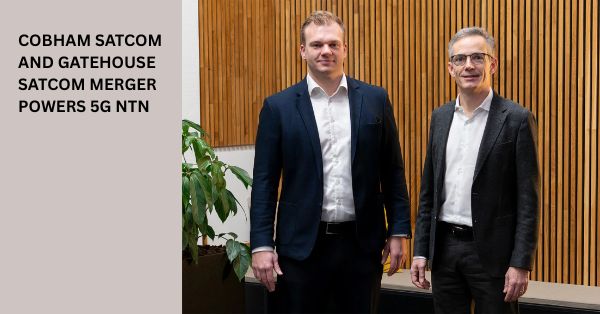
Cobham Satcom is merging its Network Division with Gatehouse Satcom to push 3GPP-based non-terrestrial networks from trials to scalable deployments.
Transaction highlights and governance
The combined entity will sit as a subsidiary within Cobham Satcom Group, led by Kenney Schmidt Christiansen, Gatehouse Satcom’s current CEO. Cobham Satcom will hold a majority stake and continue to serve maritime, government, and enterprise customers through its SAILOR, Sea Tel, EXPLORER, and TRACKER brands. The transaction requires standard regulatory approvals but positions both companies to offer an end-to-end 5G NTN platform spanning software, ground infrastructure, and terminals.

3GPP R17/R18 timing and market drivers
3GPP Release 17 introduced NTN for NR and NB-IoT, with Release 18 advancing performance, mobility, and device interoperability. At the same time, direct-to-device (D2D) momentum and multi-orbit investments are reshaping how satellite and cellular converge. Operators and MNOs increasingly want standards-based options to reduce integration risk, unlock roaming, and broaden device support.
Unified 5G NTN stack: software + ground infrastructure
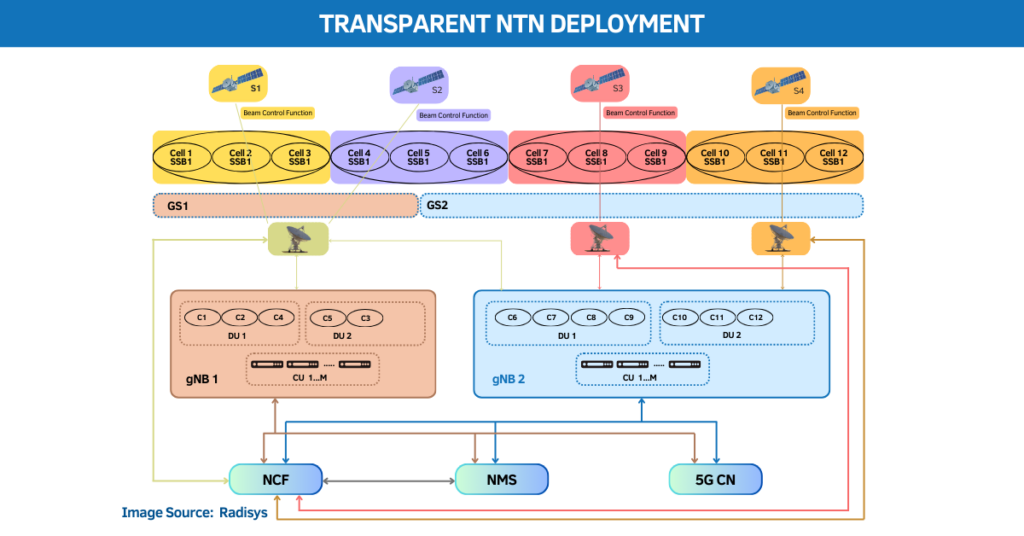
The merger unites Gatehouse’s 3GPP NTN software stack with Cobham Satcom’s radio access platforms, gateways, and field-proven terminal portfolio.
3GPP-aligned NTN software for LEO/MEO/GEO
Gatehouse Satcom brings mature NTN implementations for 5G NR and NB-IoT aligned to 3GPP specifications. Its stack has been exercised across low, medium, and geostationary orbits, addressing Doppler, timing advance, and mobility constraints unique to space-based RANs. Crucially, it supports co-existence with legacy services such as BGAN, easing migration paths for incumbent satellite operators.
Gateways, RAN platforms, and mission-critical terminals
Cobham Satcom contributes decades of expertise in RAN platforms, gateways, and antennas deployed in demanding maritime, defense, and enterprise environments. Its installed base and channel reach give the merged entity scale for certification, lifecycle support, and global rollout. Together, the companies can now deliver integrated software and hardware upgrades across gateways and terminals to accelerate 5G NTN commercialization.
Interoperable, multiorbit roadmap (R18, SA/Hybrid NTN)
The new entity emphasizes 3GPP compatibility and multiorbit flexibility to improve vendor interoperability and device availability. Expect a roadmap that targets Release 18 features, supports standalone NTN and hybrid terrestrial-satellite modes, and preserves backward compatibility where required. The aim is a smoother transition for operators and service providers that must protect revenue while adopting 5G.
Benefits for operators, MNOs, and enterprises
The combination targets satellite operators, MNOs, governments, and enterprises that need resilient, standards-based connectivity.
Value for satellite operators and service providers
An integrated stack can shorten time-to-market for 5G NTN and D2D offerings while reducing engineering risk. Operators gain a partner that spans waveform optimization, RAN adaptations, gateway integration, and terminal evolution. This is particularly relevant for multi-orbit networks that must balance coverage, capacity, and device economics.
What MNOs and device vendors gain
For mobile operators, standards-based NTN simplifies interworking with the 5G core and enables roaming models that mimic terrestrial operations. As chipset vendors expand NTN support, MNOs will want validated reference designs and clear integration playbooks. The merged portfolio is positioned to provide test, validation, and deployment tooling aligned to 3GPP conformance.
Government, defense, maritime, IoT, enterprise use cases
These sectors need assured connectivity in contested, remote, or mobile environments. Cobham Satcom’s terminal breadth, combined with a standards-based NTN stack, supports resilient comms, multi-link orchestration, and compliance processes. IoT providers also benefit from NB-IoT NTN paths that can scale with constrained devices and long battery life.
5G NTN market landscape and competition
NTN is moving from proofs to pilots as incumbents and challengers race to standardize D2D and satellite backhaul.
D2D momentum and vendor positioning
High-profile initiatives in D2D and satellite-to-cellular services have heightened expectations for global coverage using ordinary smartphones. While approaches vary by spectrum and architecture, the center of gravity is shifting toward 3GPP-aligned NTN to unlock scale and interoperability. This merger underscores that vendors with both software depth and ground assets will be central to commercial rollouts.
Ecosystem alignment, testing, and partnerships
The winners in NTN will pair standards adherence with robust certification, test, and partner programs. Conformance testing, waveform tuning, and integration with terrestrial cores remain gating items. Vendors that can bridge satellite, RAN, and device ecosystems will reduce the integration burden for operators and MNOs.
Execution risks for 5G NTN rollout
Momentum is strong, but several hurdles could affect timelines, economics, and service quality.
Standards maturity and device availability
Release 18 features must stabilize, and device availability must expand beyond early models. Chipset roadmaps, power budgets, and RF front-end constraints will shape service coverage and performance. Certification pipelines will need to scale as trials become commercial services.
Spectrum, regulation, and coexistence risks
Regulatory approvals, cross-border coordination, and coexistence with incumbent satellite and terrestrial users are non-trivial. Band choices in L-, S-, or other ranges carry different link budgets and interference risks. Operators will need clear policies and monitoring to protect service integrity.
Integration complexity and TCO control
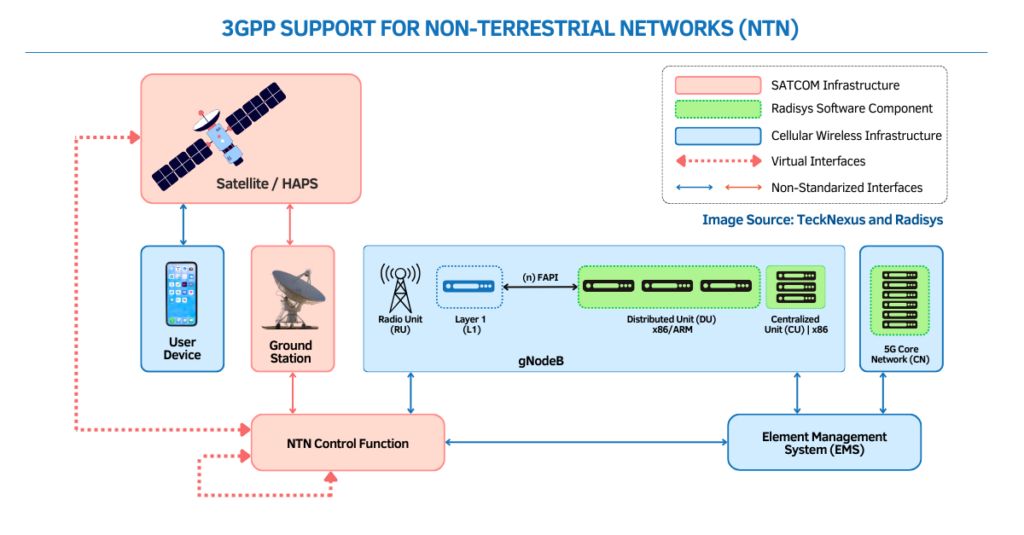
End-to-end NTN touches satellites, gateways, RAN software, cores, and devices. Interoperability testing and lifecycle support drive cost and deployment speed. Clear SLAs, observability, and automation will be essential to control total cost of ownership.
Next steps and watchlist for 5G NTN
Stakeholders should align roadmaps to 3GPP NTN while de-risking integration through staged trials and ecosystem partnerships.
Actions for satellite operators
Map your orbits, spectrum, and ground assets to a phased NTN rollout that preserves legacy revenue. Prioritize gateway upgrades, waveform trials, and terminal refresh plans aligned to Release 18. Seek reference architectures from the merged entity to accelerate interoperability with existing OSS/BSS and partner networks.
Actions for MNOs and OEMs
Plan core interworking, policy control, and roaming models for NTN traffic. Engage on device roadmaps for NR NTN and NB-IoT NTN, including RF, power, and antenna impacts. Establish testbeds with the combined Cobham-Gatehouse team to validate mobility, QoS, and emergency services across satellite and terrestrial domains.
Key milestones to track
Watch for regulatory clearance, a unified product roadmap, and conformance test results tied to Release 18. Track partner announcements across satellite operators, MNOs, and chipset vendors. Early D2D pilots and maritime/defense deployments will be leading indicators of scale and service maturity.
Bottom line: this merger creates a fuller-stack 5G NTN supplier with credible software, ground infrastructure, and terminal capabilities—exactly what the market needs to move from standards to sustainable services.