
5G-Advanced ISAC private network goes live
ZTE, China Unicom Liaoning and Dalian Changhai Airport have put a 5G-Advanced private network with integrated sensing and communications into live service to address low-altitude security at an island test flight field.
Private 5G-Advanced ISAC for low-altitude security
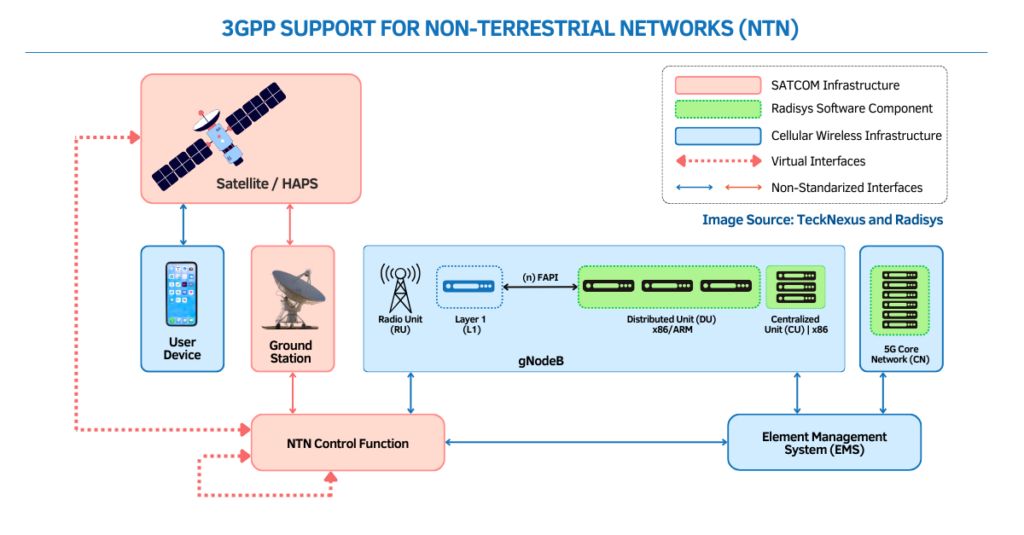
The partners deployed a private 5G-Advanced architecture that fuses high-throughput connectivity with precision sensing on the same infrastructure, tailored for a maritime, island airport where traditional patrols and single-sensor radars leave blind spots for “low, slow, small” targets such as drones and bird flocks. ZTE provides millimeter-wave base stations that use 5G waveforms for sensing, an on-premises core, and edge compute; China Unicom Liaoning led planning, integration and operations; and the airport supplied operational requirements and domain expertise.

Live results: 98% detection, faster response, lower TCO
According to the partners, the network is running 24/7 at the test flight field and has lifted low-altitude detection accuracy near 98%, shrunk blind spots for small targets from roughly 30% to 5%, and cut average response time to runway intrusions and equipment anomalies from about 15 minutes to 2 minutes. Manual patrols reportedly fell from every two hours to once daily while sustaining zero safety incidents across more than one hundred test missions. By consolidating connectivity and sensing on one footprint, the deployment claims about 30% less space, roughly 25% lower capital intensity versus separate radios and radars, and a markedly shorter payback period.
Why low-altitude security needs 5G-Advanced ISAC
Airports, ports and industrial campuses are under pressure to secure low-altitude airspace as drones proliferate and wildlife risks persist, without expanding opex or operational complexity.
Closing the low, slow, small detection gap
Conventional perimeter sensors struggle with slow-moving or low-RCS objects, and adding standalone radars can be costly and spectrum constrained. A 5G-A ISAC approach turns cellular infrastructure into a dual-purpose platform: the same mmWave cells that deliver bandwidth also emit and process radio reflections to estimate position, velocity and trajectory with sub-meter precision. Edge AI fuses cellular sensing with video and geospatial context for multi-target classification, improving situational awareness and response workflows.
Converged network economics and ROI
Replacing radar overlays with an integrated sensing-capable 5G layer reduces site count, cabling, and power, while accelerating time-to-value by reusing private cellular investments for both OT connectivity and security. The reported capex and footprint reductions, plus fewer manual patrols, point to lower TCO and faster ROI for operators seeking scalable models across distributed sites.
Security-by-design for regulated private networks
For aviation and other critical infrastructure, on-premises cores, hard isolation, strong access controls and encrypted transport are table stakes. The deployment adds edge data desensitization and audit logging, alongside 24×7 governance and automated vulnerability scanning. Those controls align with safety case requirements and give operators confidence to host more mission-critical applications at the edge.
How the 5G-Advanced ISAC stack works
The solution combines mmWave radio sensing, MEC-hosted AI, and RedCap-based device onboarding within a single, locally anchored private network.
mmWave sensing on 5G NR for precise tracking
ZTE’s base stations in millimeter-wave bands transmit 5G waveforms and analyze reflections using time-of-arrival, Doppler and phase to reconstruct target trajectories and speed. With high bandwidth and narrow beams, mmWave is well suited for fine-grained sensing in constrained zones like runways and aprons, achieving radar-like capability without deploying separate radar hardware.
Edge AI sensor fusion for real-time classification
Intelligent compute boards at the edge run models that fuse cellular sensing with video streams and geographic layers for real-time classification, including bird-versus-drone discrimination. Local processing keeps latency low for alarming and orchestration of field teams, and reduces exposure of sensitive data by keeping raw feeds on-premises.
RedCap for cost-effective device connectivity
The design incorporates 5G Reduced Capability (RedCap) to connect cameras and sensors across hangars, airfields and remote points where cabling is difficult. RedCap, introduced in 3GPP Release 17 and evolving in 5G-Advanced, brings lower-cost, lower-power 5G endpoints that extend network reach for OT telemetry and situational awareness.
Deployment and O&M model
China Unicom Liaoning coordinated planning, deployment and O&M, while ZTE supplied ISAC radios and an on-premises core as part of an end-to-end private network package. The partners cite high availability targets backed by continuous monitoring and rapid incident response, aligning with airport safety and uptime requirements.
Standards and ecosystem outlook
The project underscores where 5G-Advanced is headed and how vendors and operators can differentiate as ISAC matures.
3GPP roadmap for integrated sensing and RedCap
Integrated sensing and communications is a flagship 5G-Advanced area with study and normative work progressing in upcoming 3GPP releases, while RedCap and positioning enhancements are already in-market. Early deployments like this one will inform profiles, performance targets and exposure APIs for third-party applications as standards solidify, particularly in mmWave and enterprise private network scenarios.
What it means for vendors and operators
Converged connectivity-plus-sensing can be a competitive lever in verticals where safety and automation intersect, from aviation to logistics and energy. Operators with private network practices can pair spectrum access, deployment services and 24×7 O&M with ISAC-capable RAN, while equipment vendors align radio, MEC and AI stacks to deliver validated blueprints for regulated sites.
Next steps for airports and campus operators
Airports and campus operators evaluating private 5G should frame pilots around measurable safety and operational outcomes while planning for standards evolution.
Define use cases and measurable KPIs
Prioritize concrete scenarios such as runway incursion detection, bird strike risk reduction, drone geofencing and equipment anomaly alerts. Set baselines and target KPIs for detection accuracy, blind-spot reduction and response time, then instrument the edge to track them.
Make deliberate architecture choices
Assess mmWave suitability for local sensing coverage, including line-of-sight, site density and weather resilience. Size edge compute for AI inference and data retention policies, and specify on-prem core with hard isolation. Plan coexistence or transition paths with existing radars and VMS platforms, and ensure integration with airport operations systems.
Procure for outcomes, SLAs, and lifecycle
Build SLAs around availability, security posture and incident response. Require roadmaps aligned to 3GPP 5G-Advanced ISAC features, RedCap device support and API exposure for UTM or A-CDM integration. Start with contained zones—test fields, cargo aprons or port berths—before scaling across sites.
Outlook: from pilots to scalable deployments
If replicated, this pattern could generalize from airports to broader low-altitude economy services and high-security campuses.
From point solutions to networked sensing and automation
By proving that one private 5G network can deliver both communications and precise sensing, the Dalian Changhai project offers a practical template for regional airports and closed campuses. Expect next iterations to expand coverage, improve precision, and open interfaces for drone scheduling, data traceability and “air–space–ground” applications—turning private 5G from a connectivity purchase into a safety and automation platform with clear ROI.